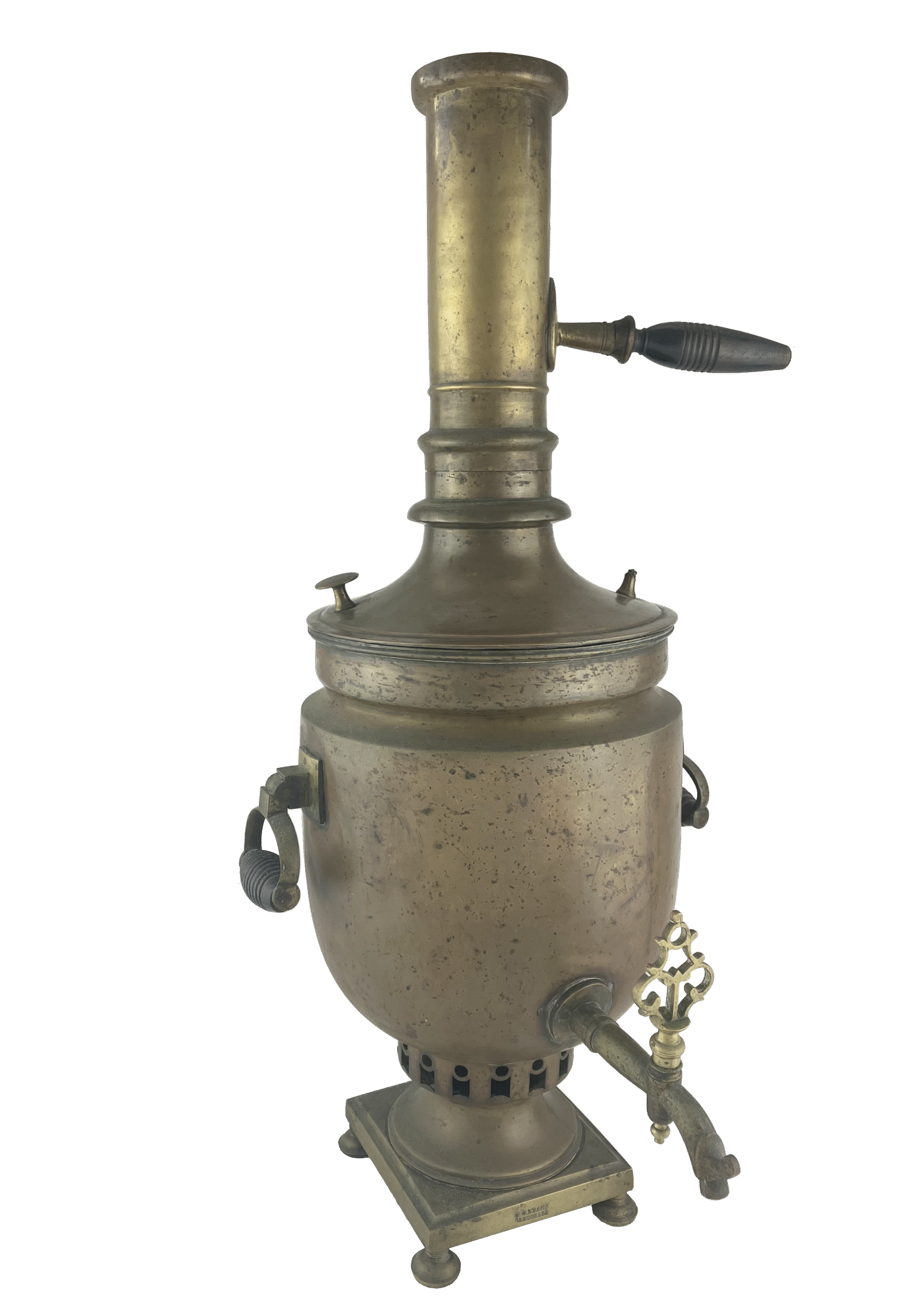
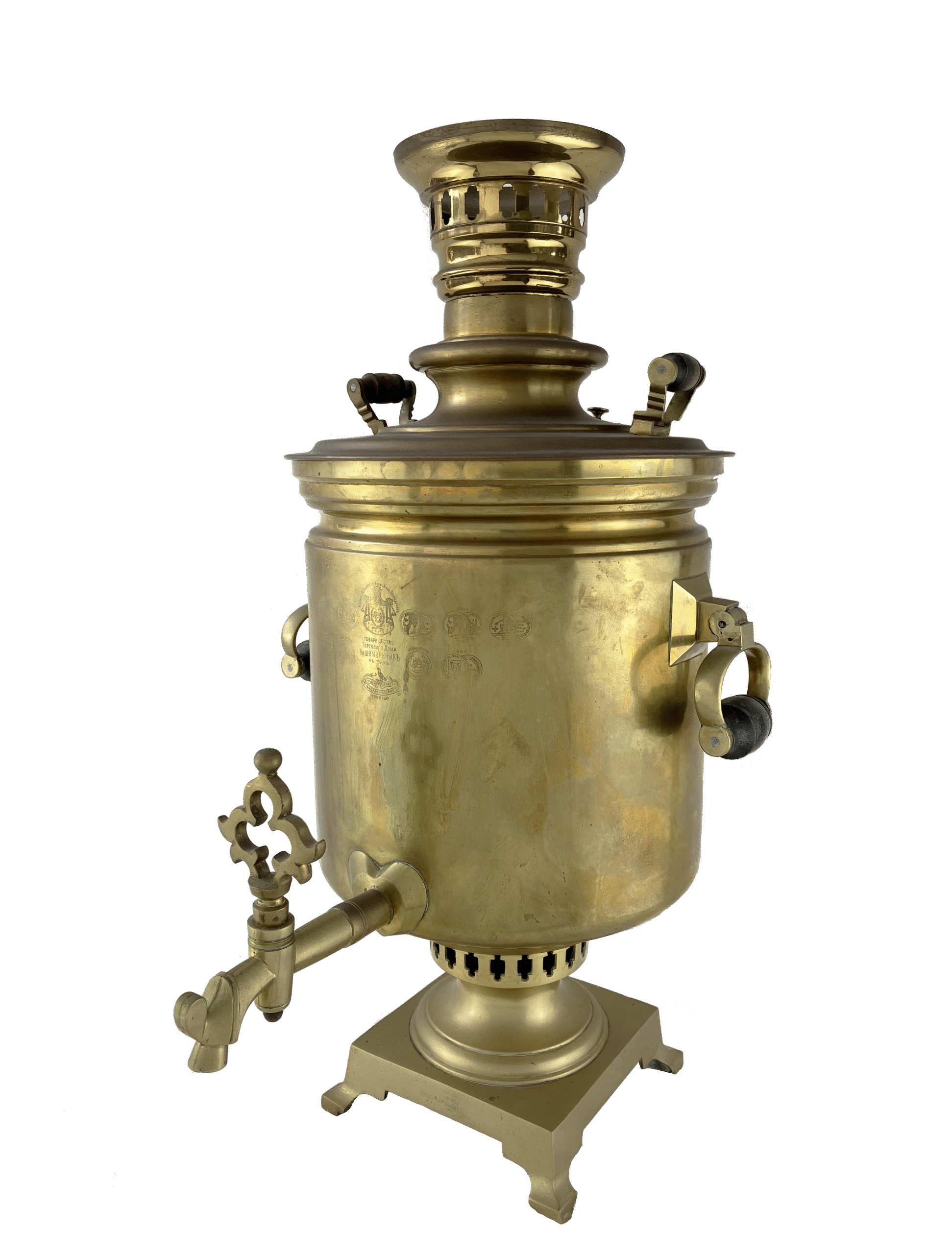
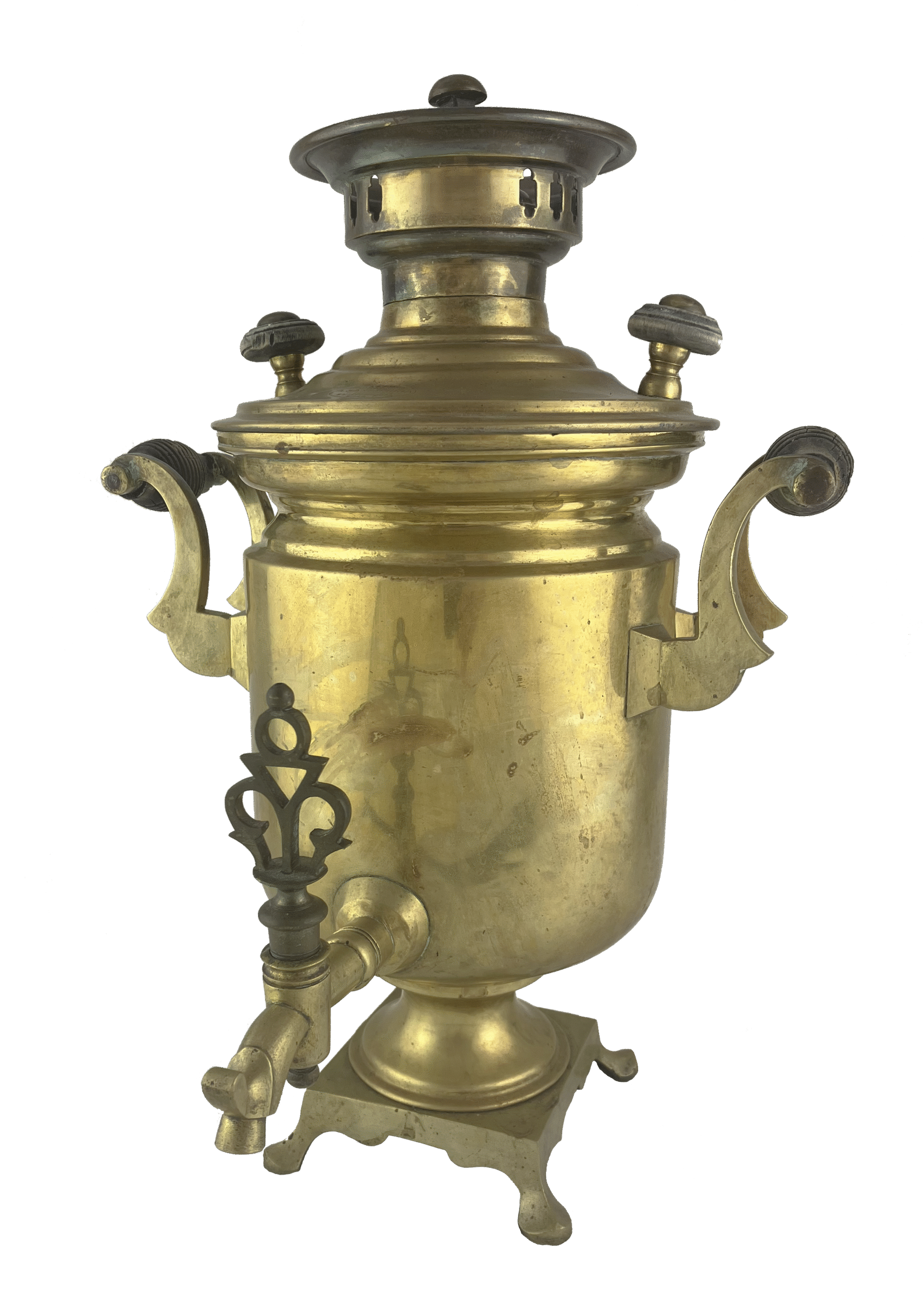
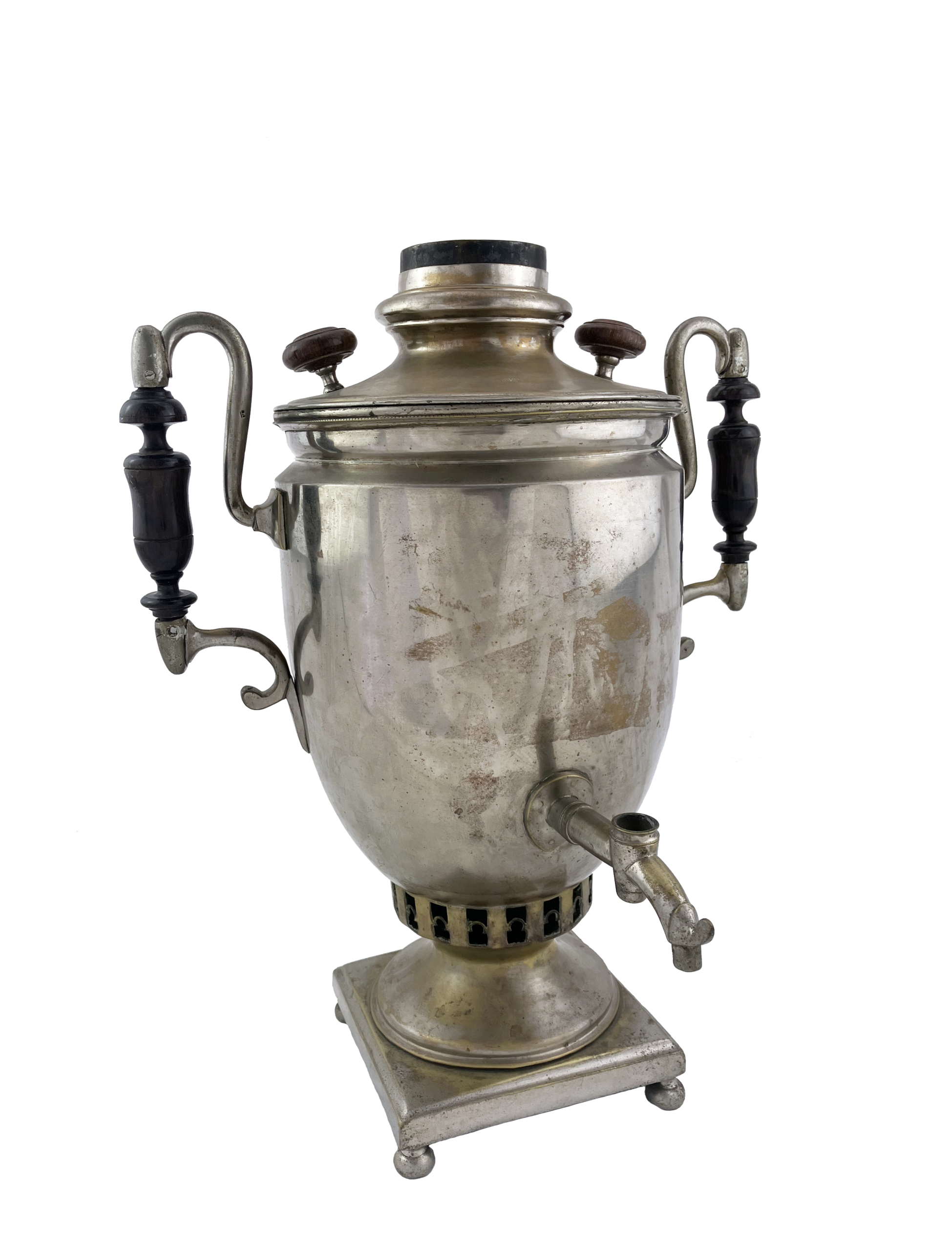
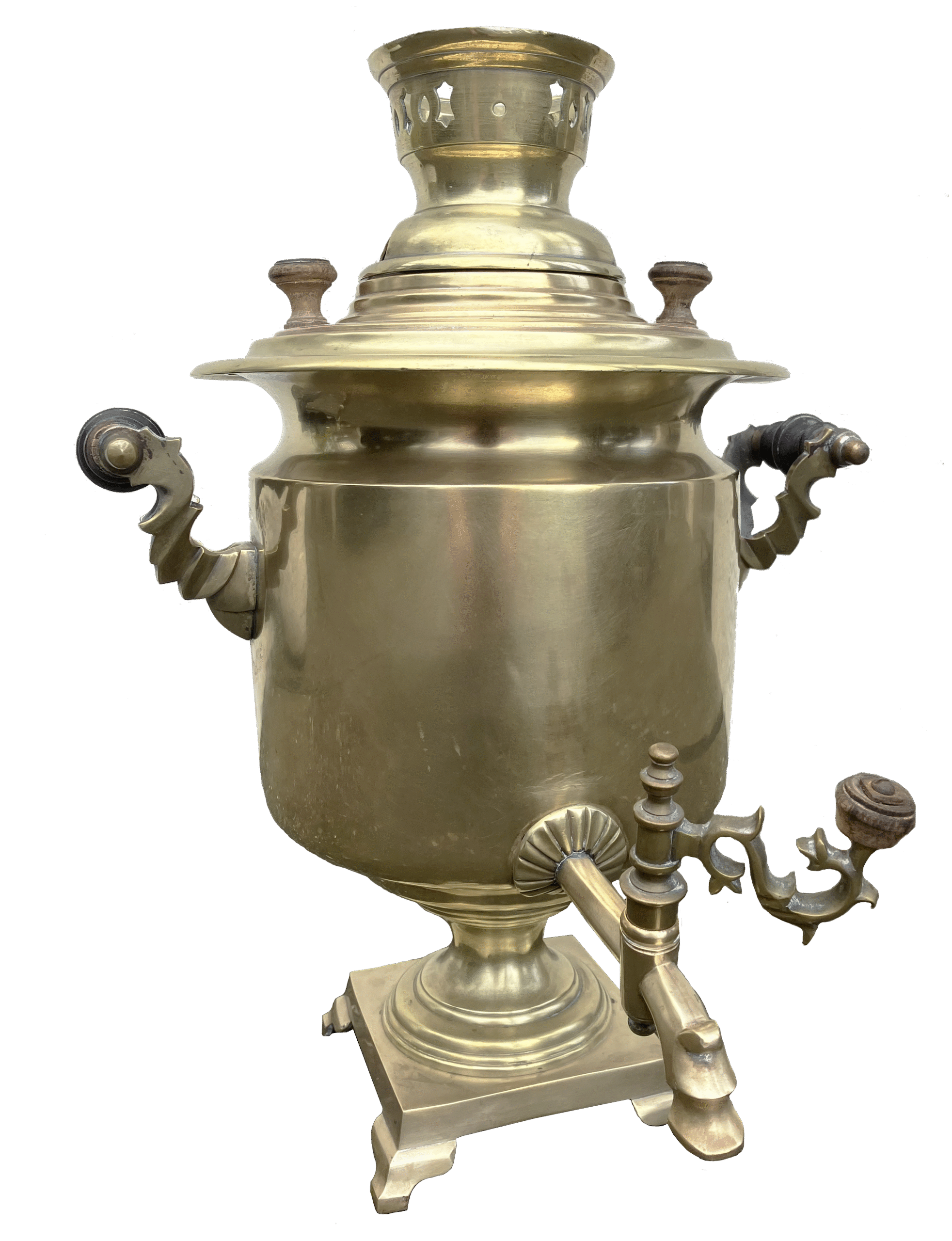
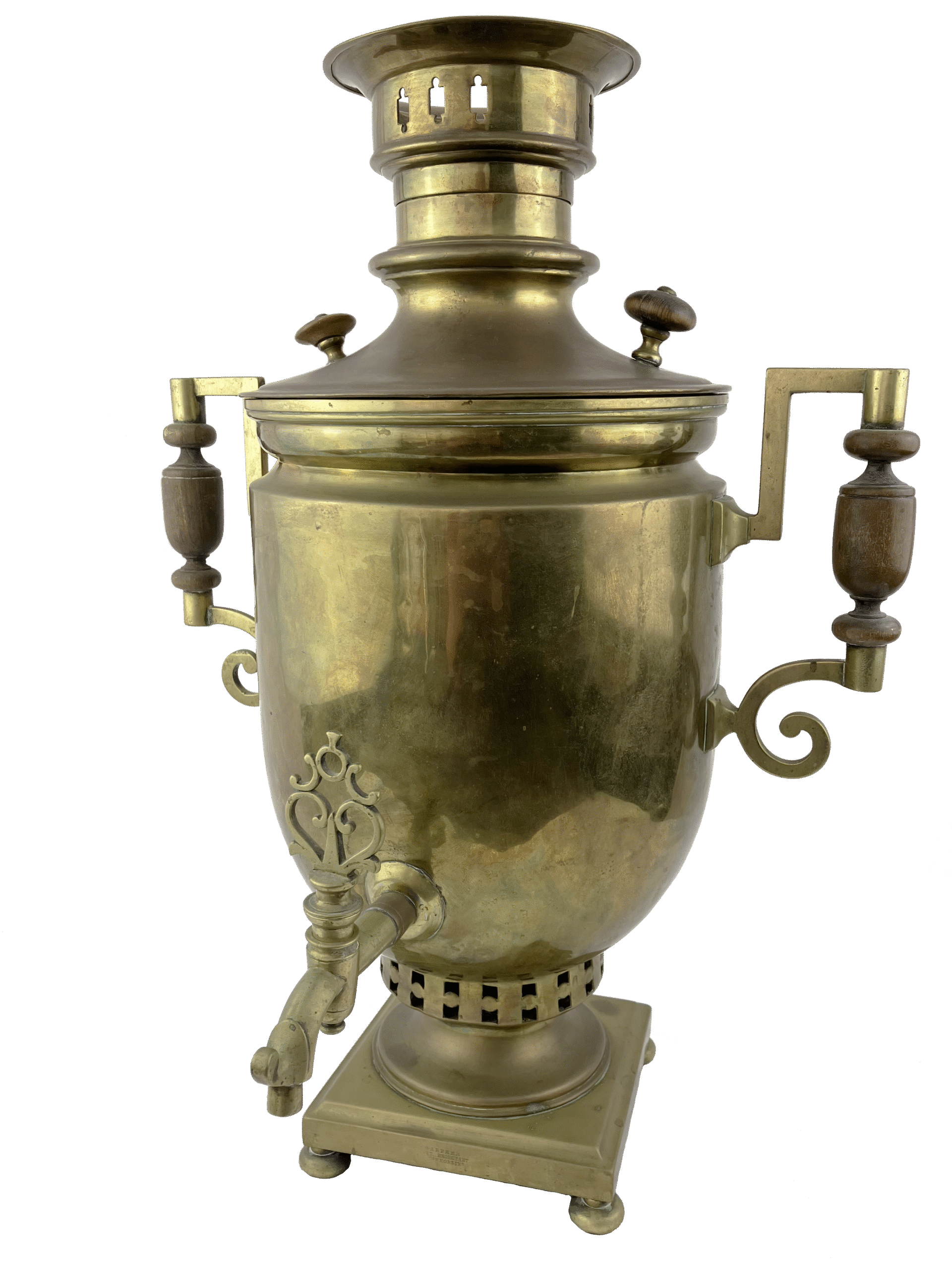
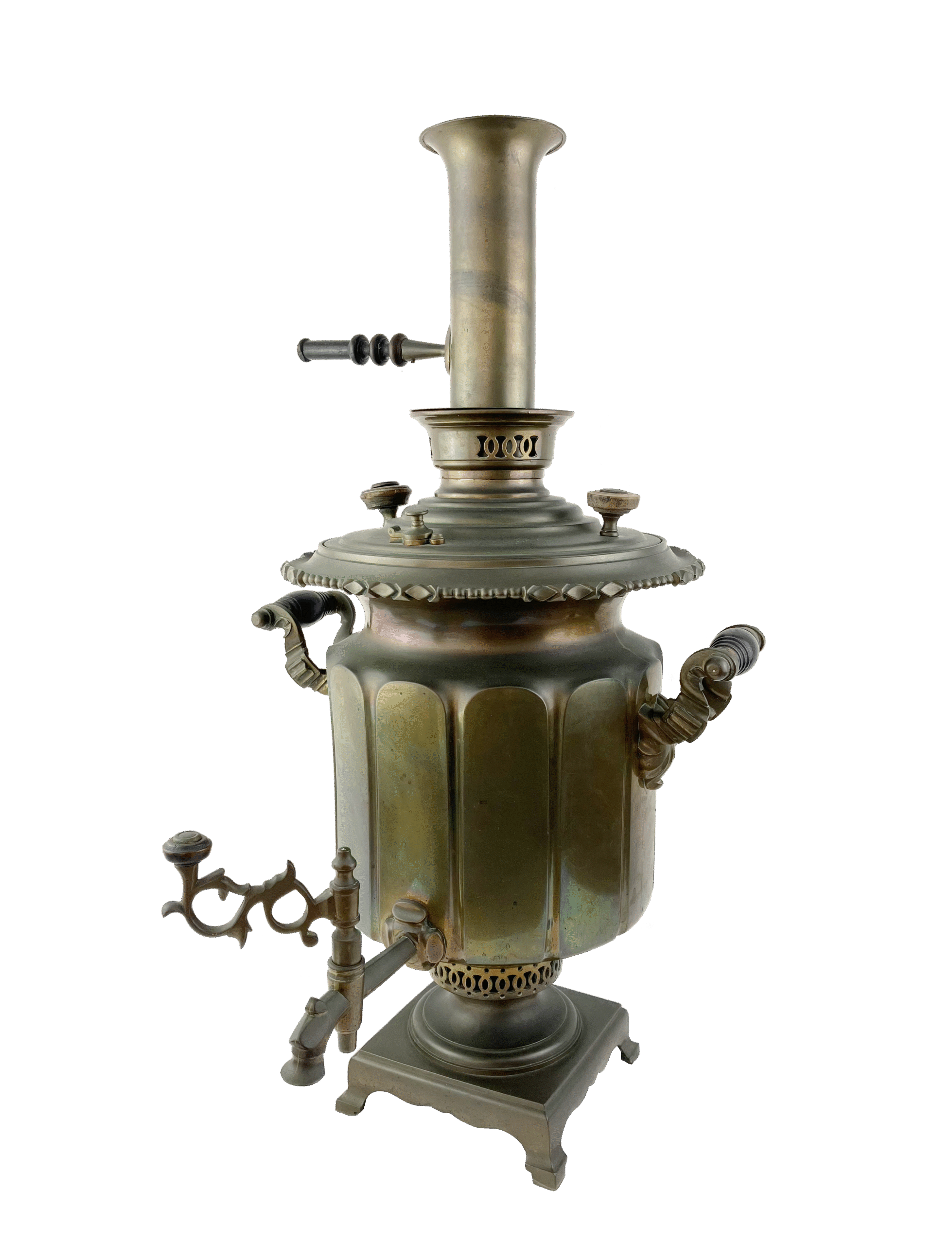
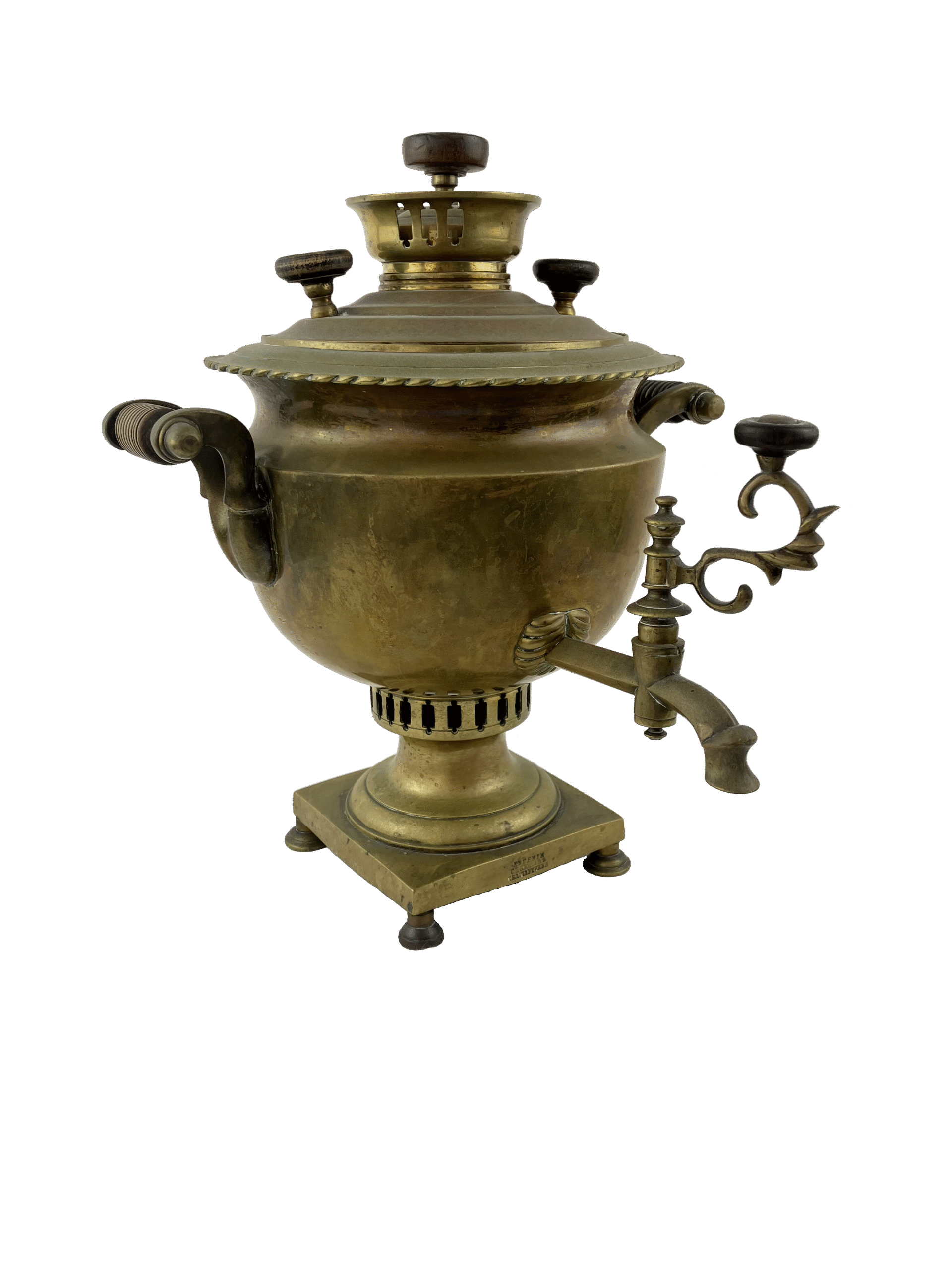
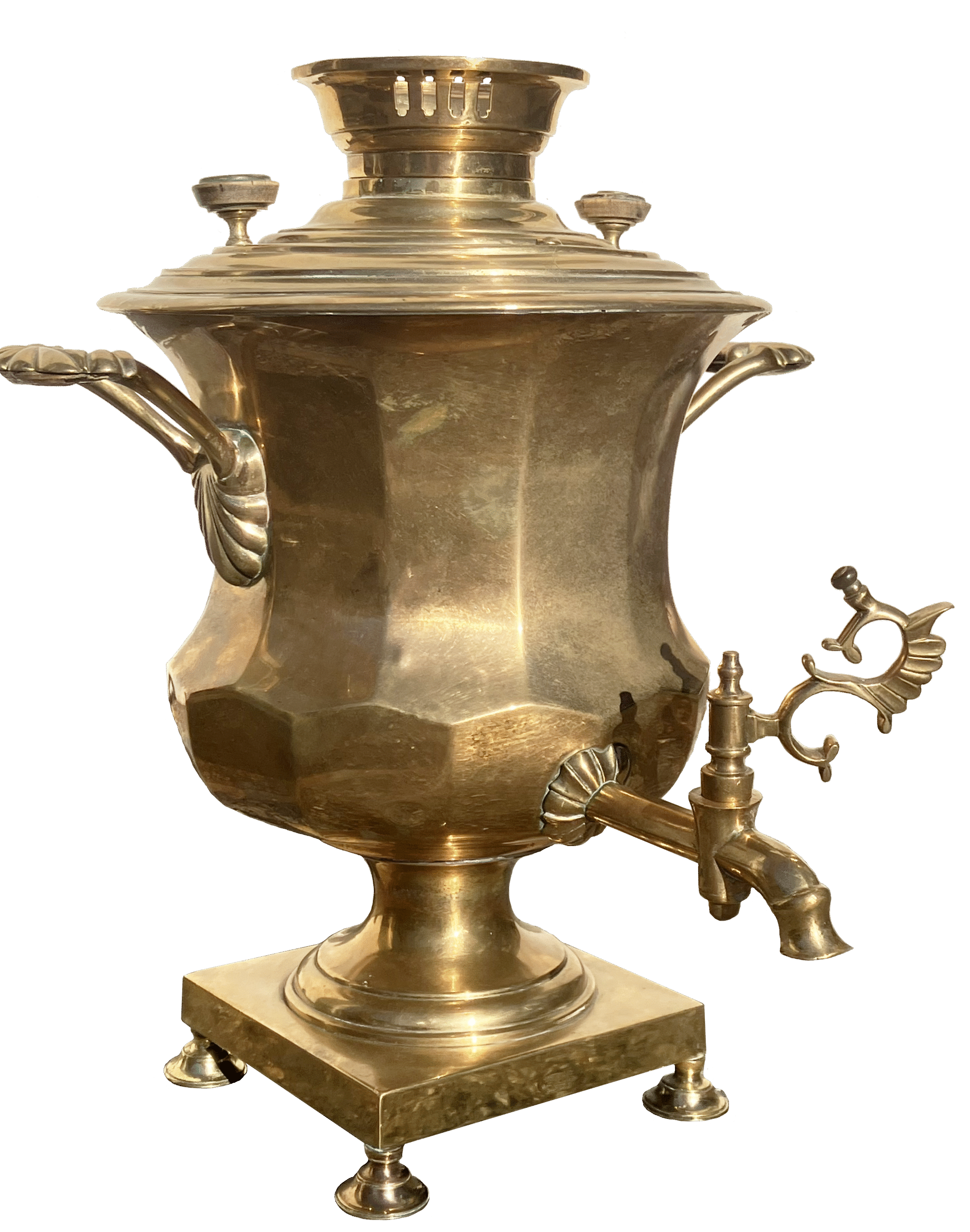
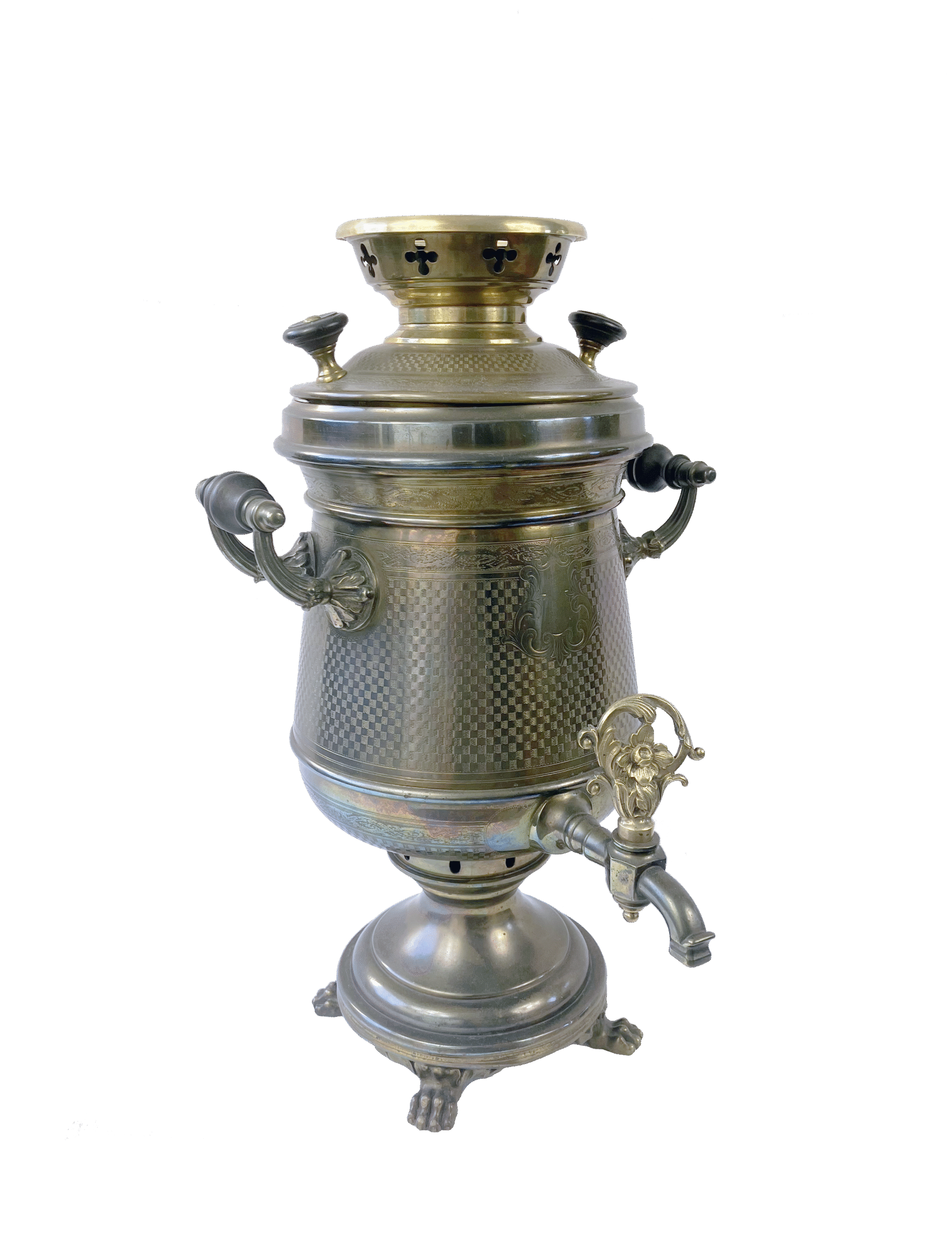
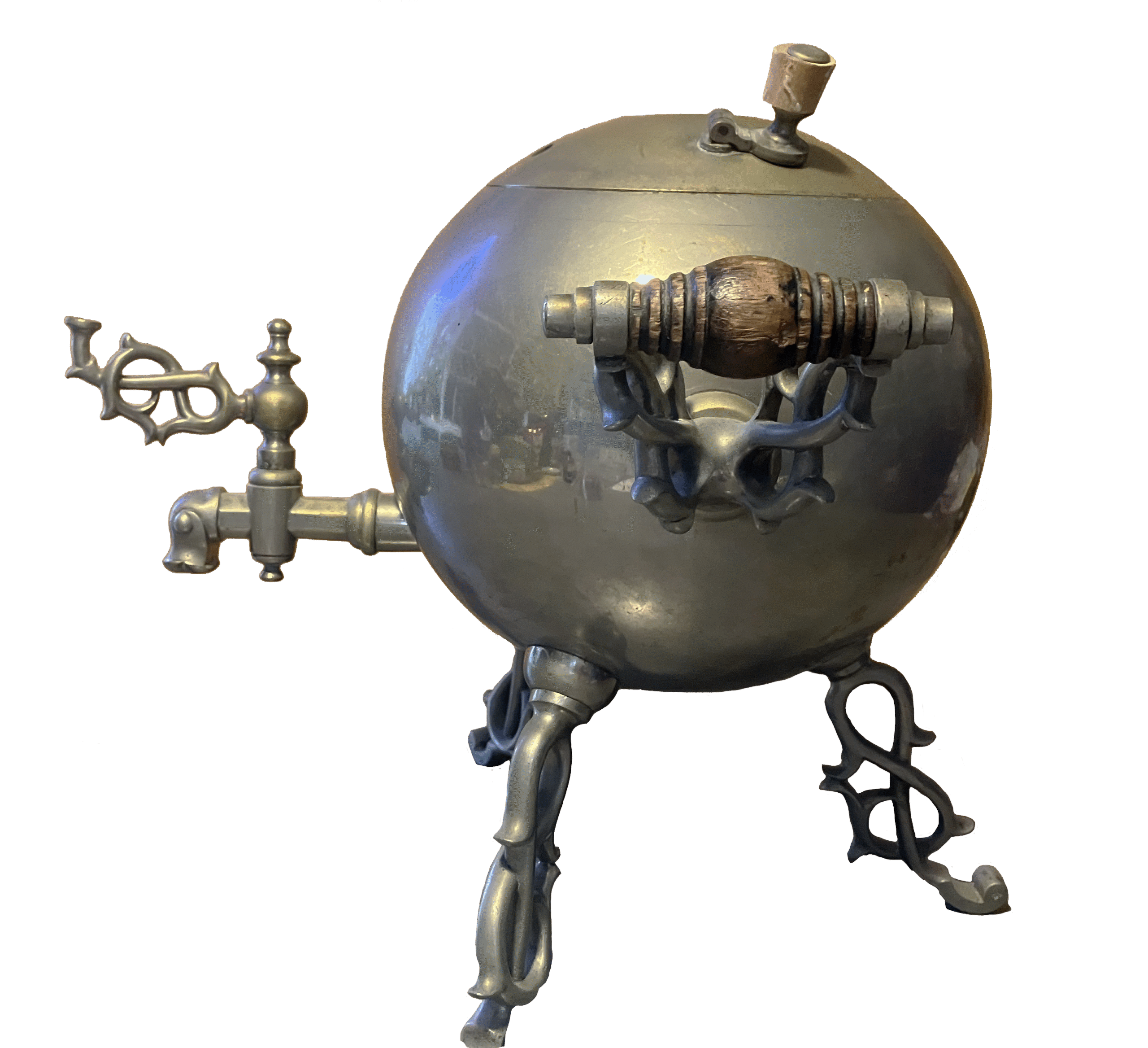
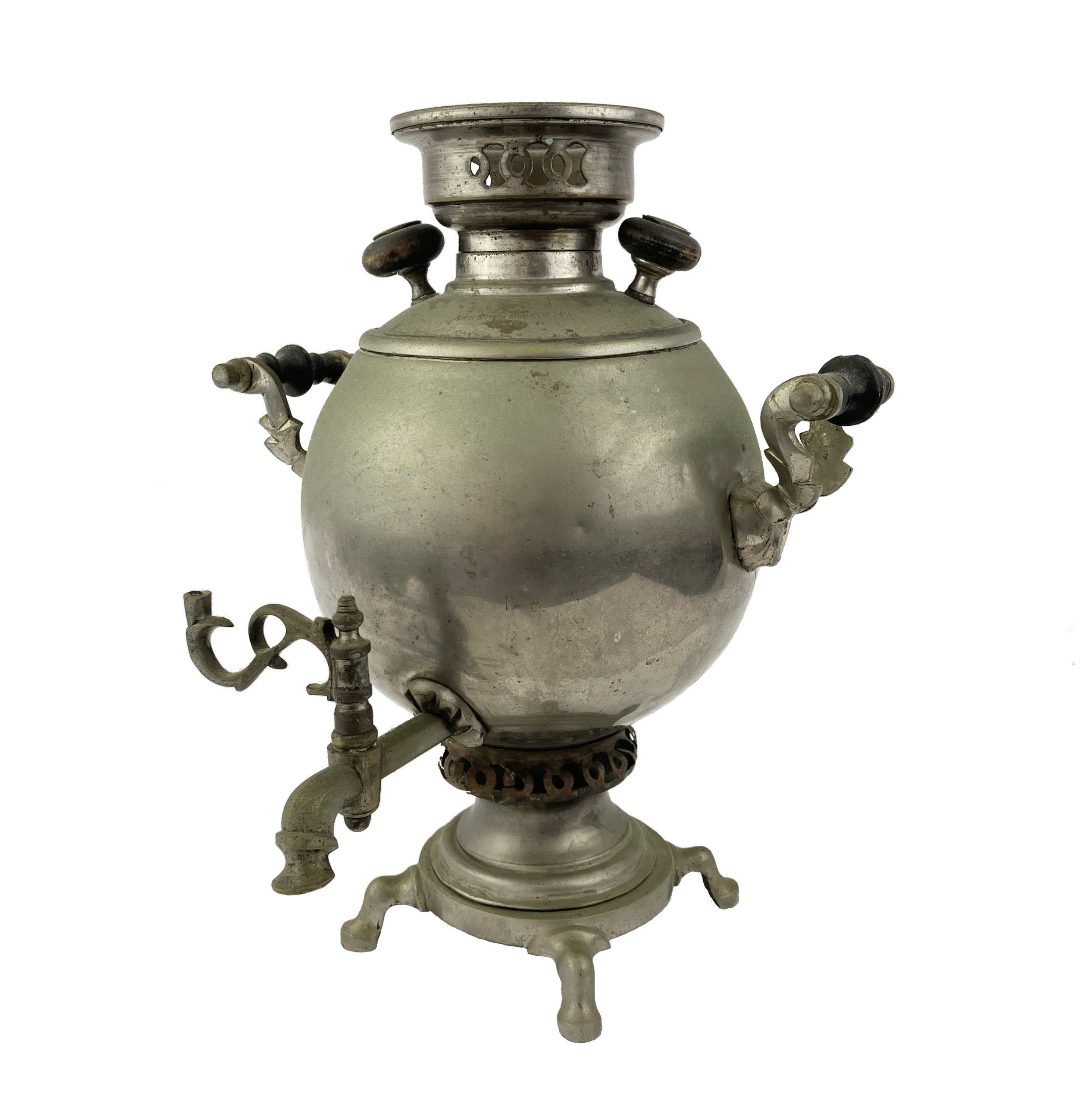
About the Collection

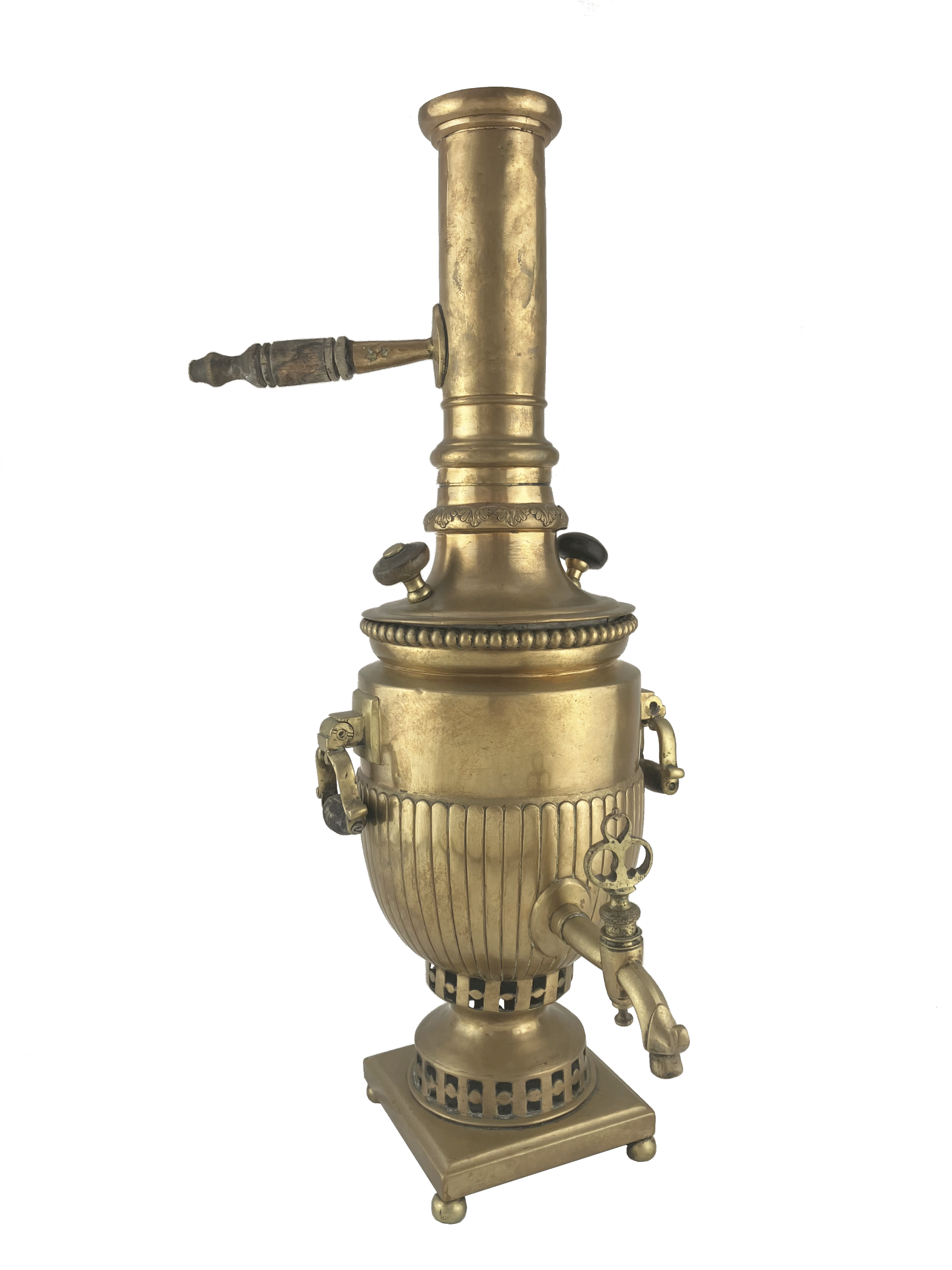
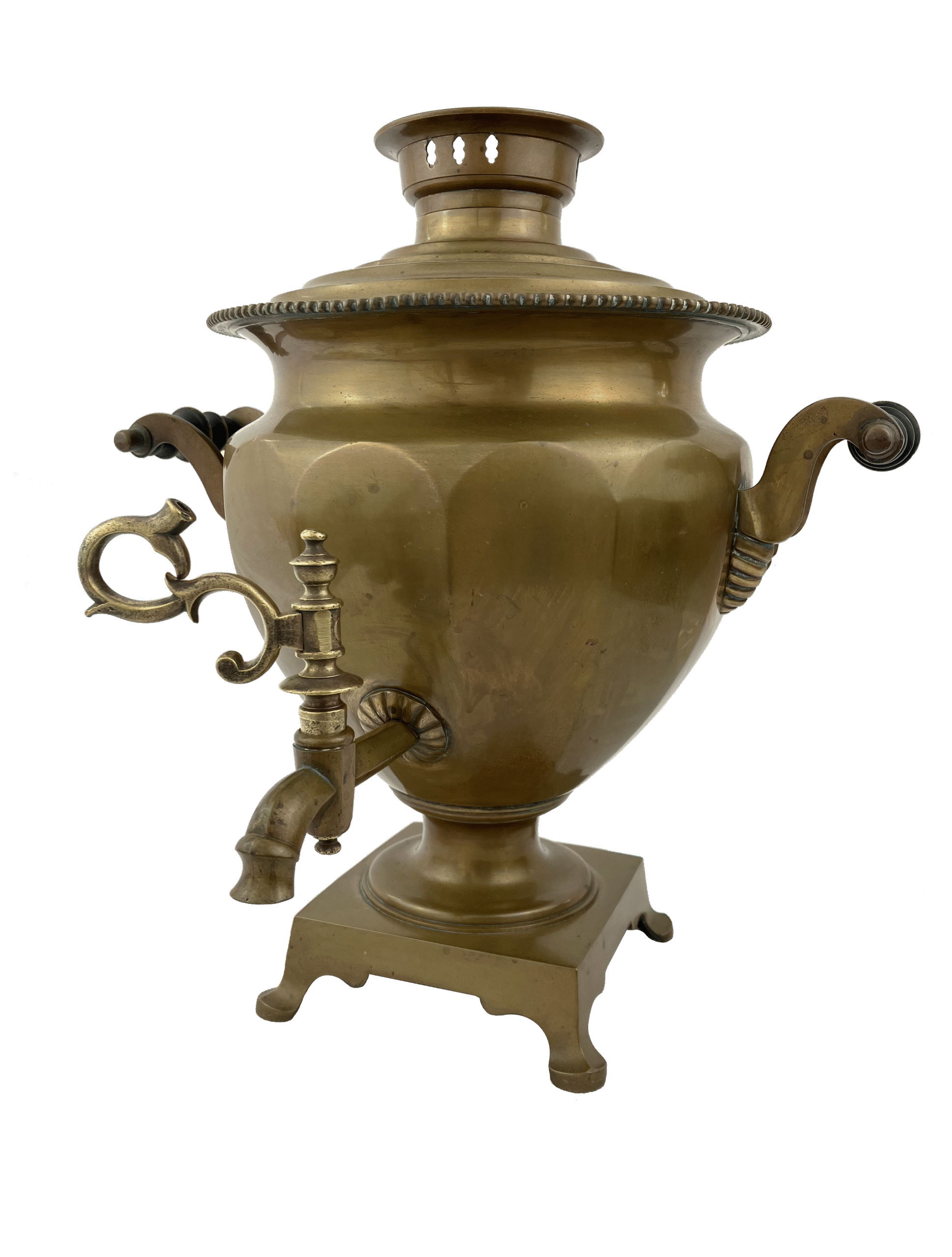
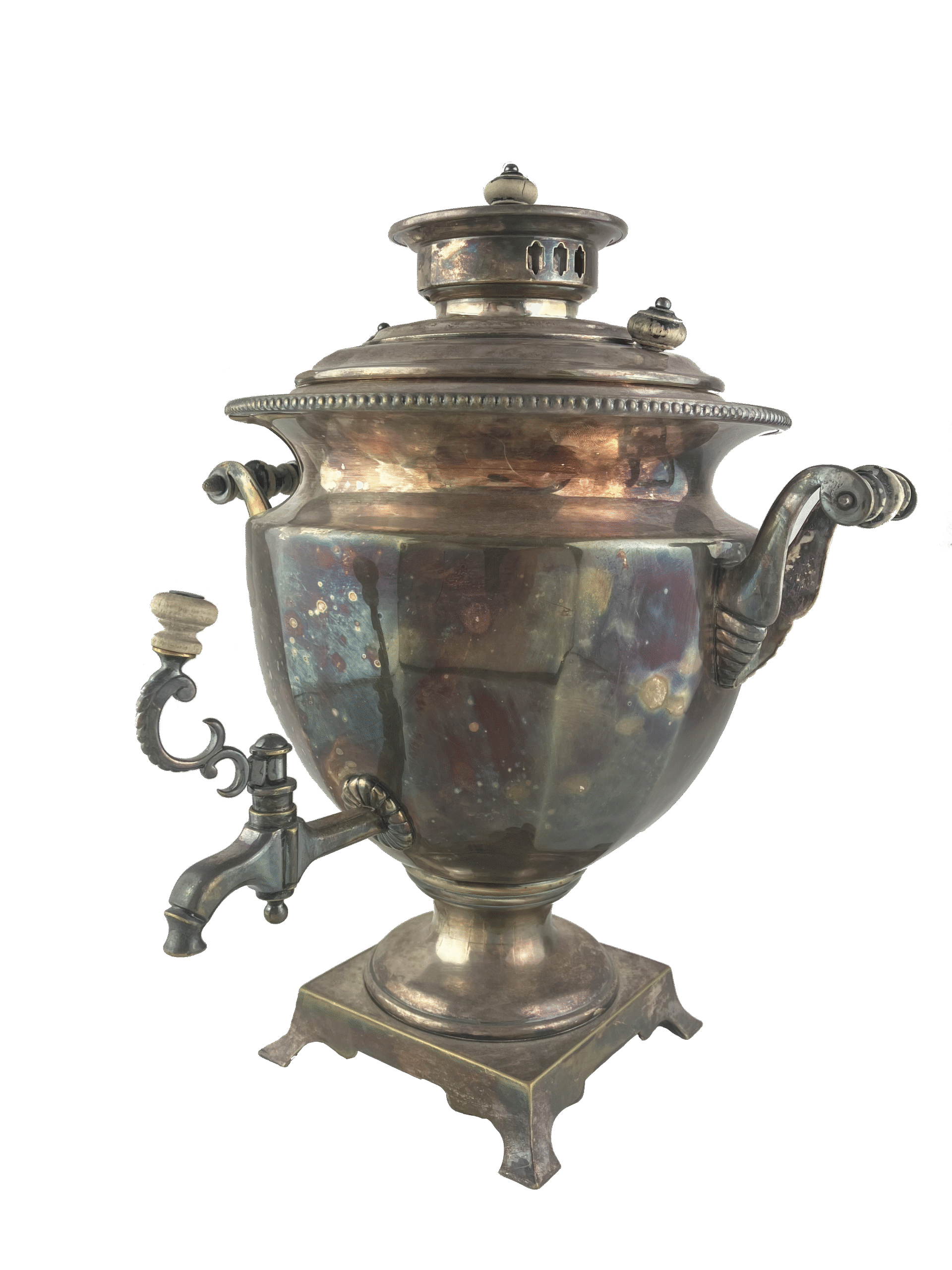
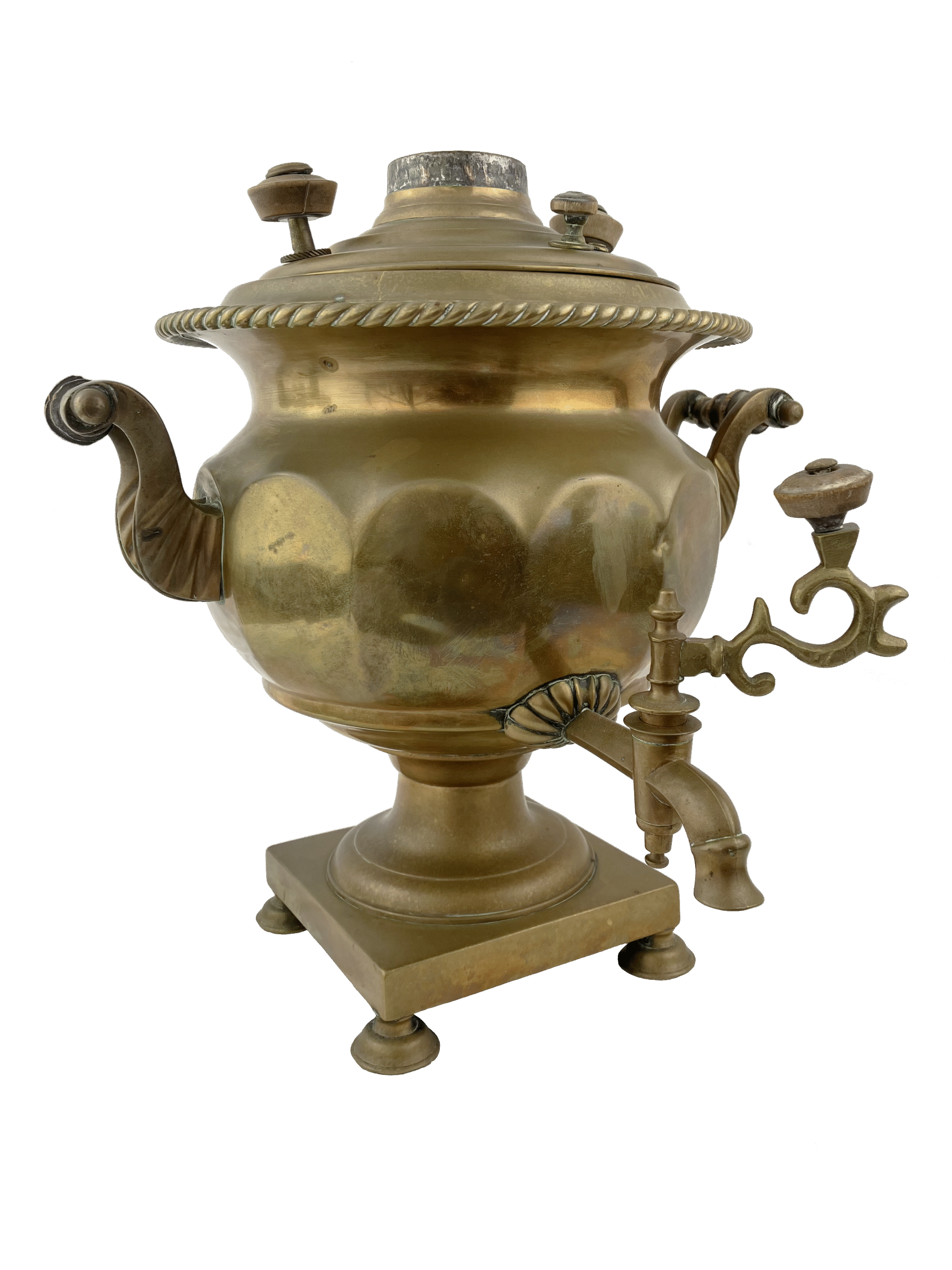
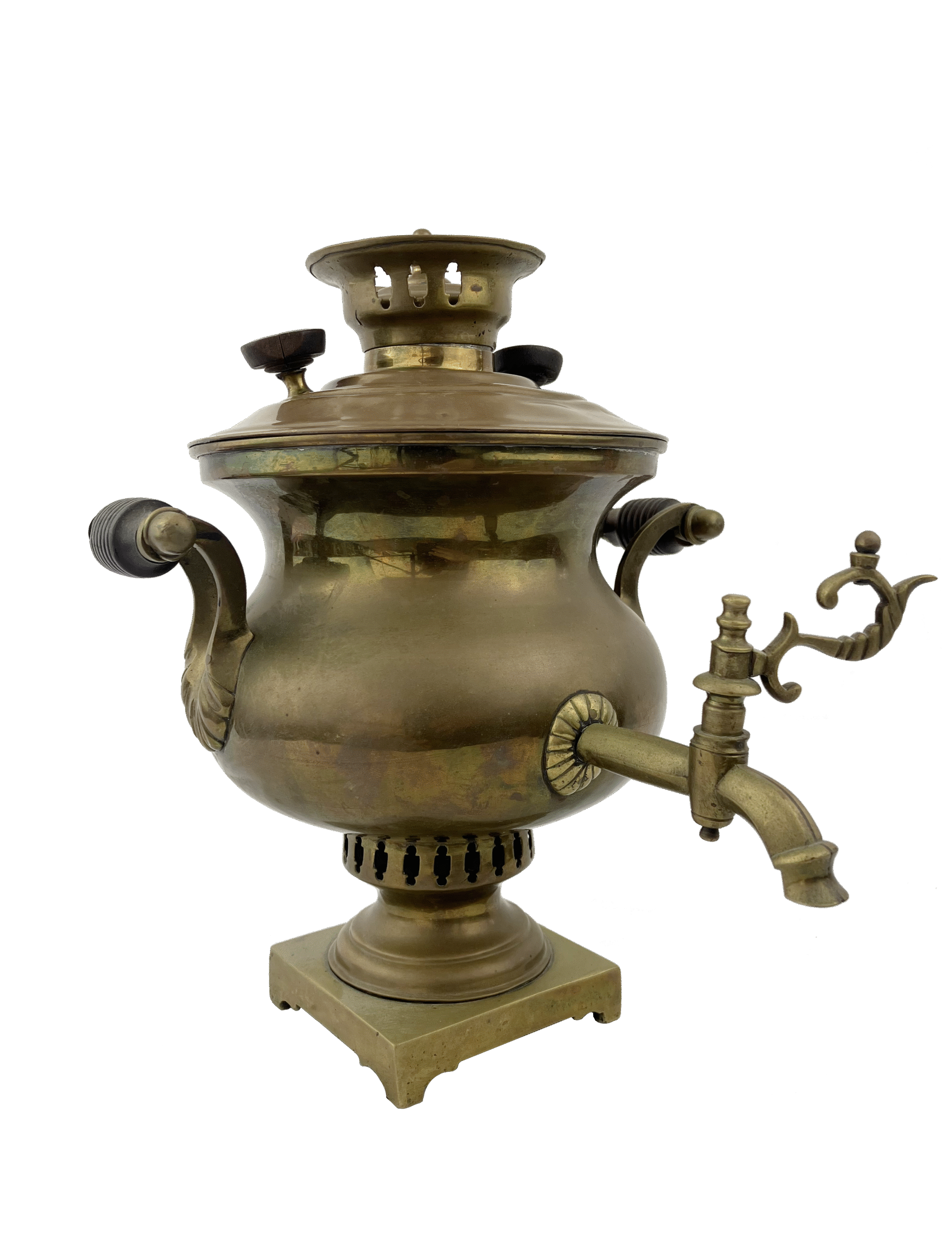
My fascination with samovars began with one remarkable story. One day, a friend invited me for tea. I expected a simple tea party, but instead, he led me to his backyard and, having brought down from the attic an old pre-revolutionary family samovar—slightly worn, yet full of character—he began to fire it up. That tea gathering left an unforgettable impression on me and inspired me to start collecting samovars.

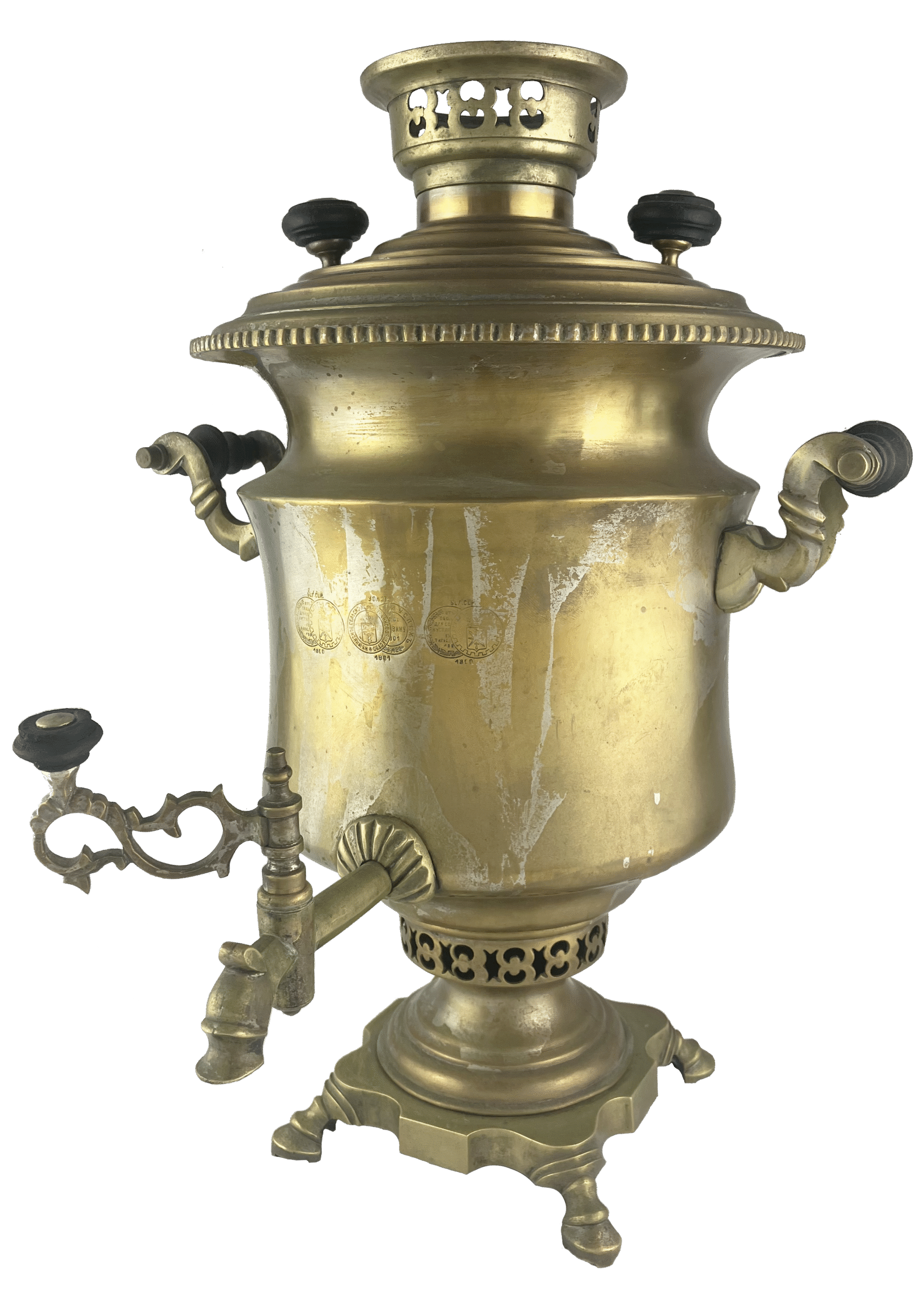
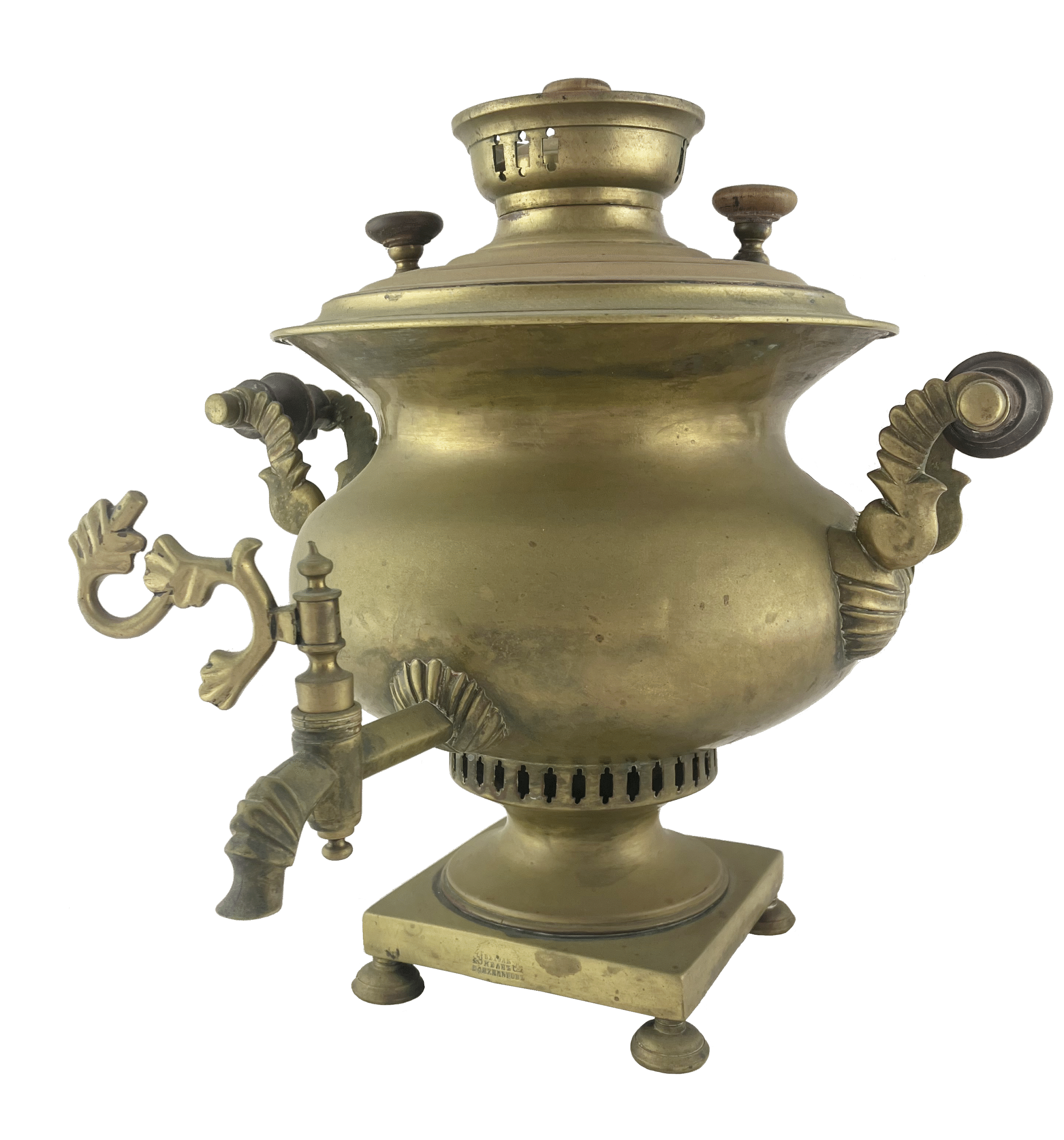
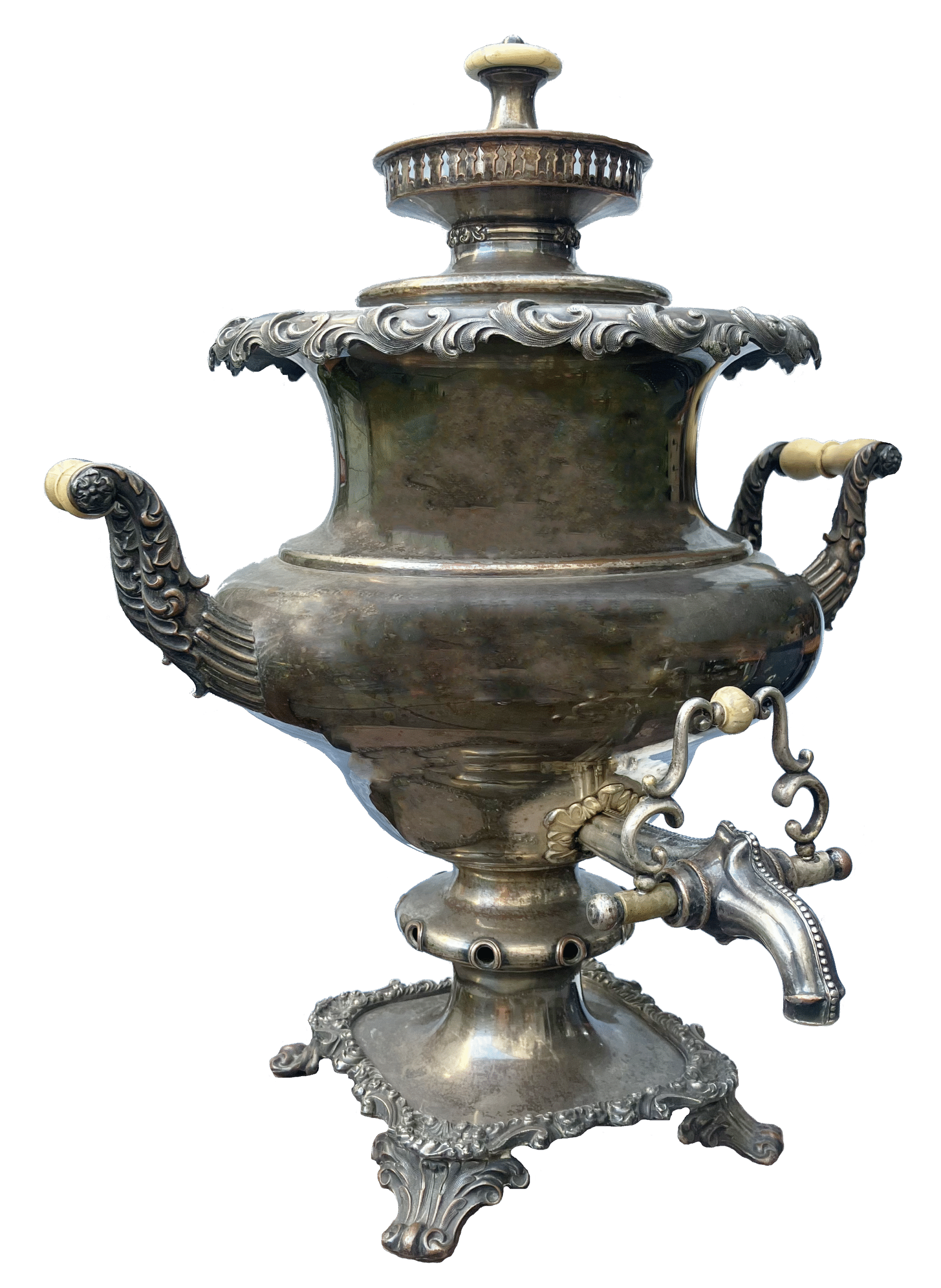
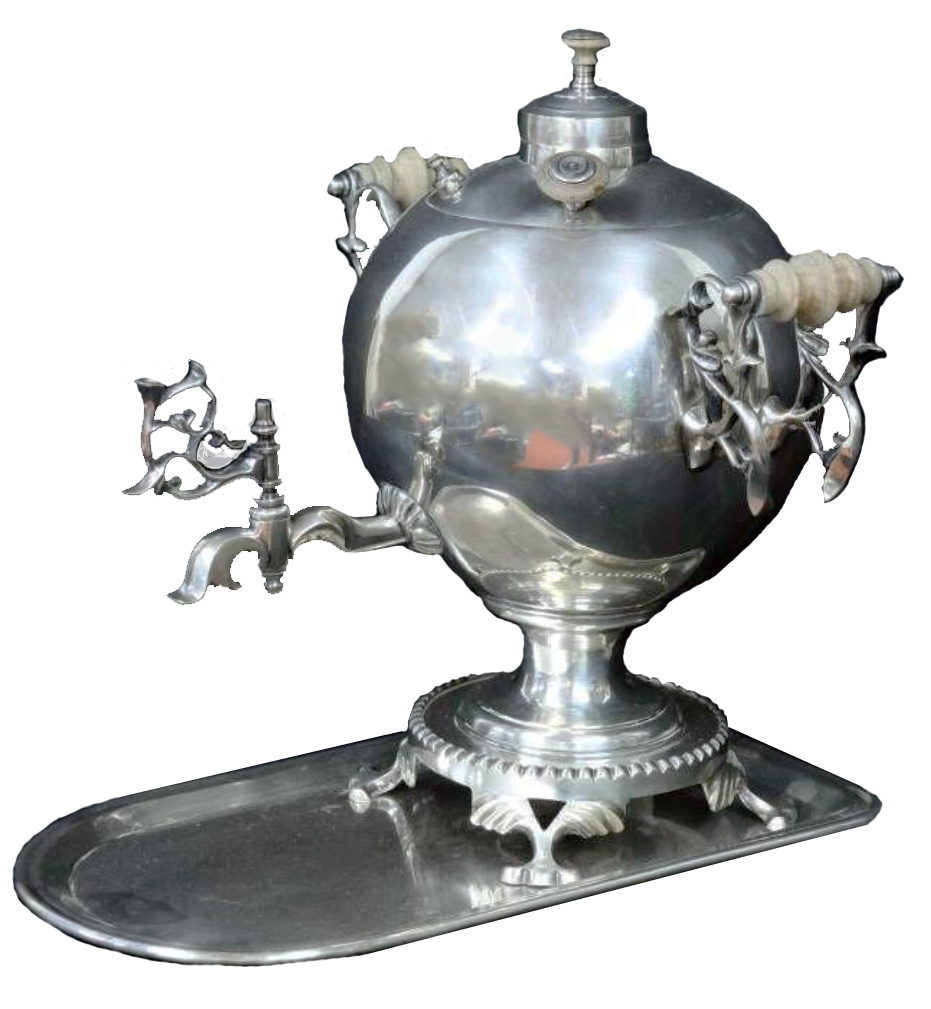
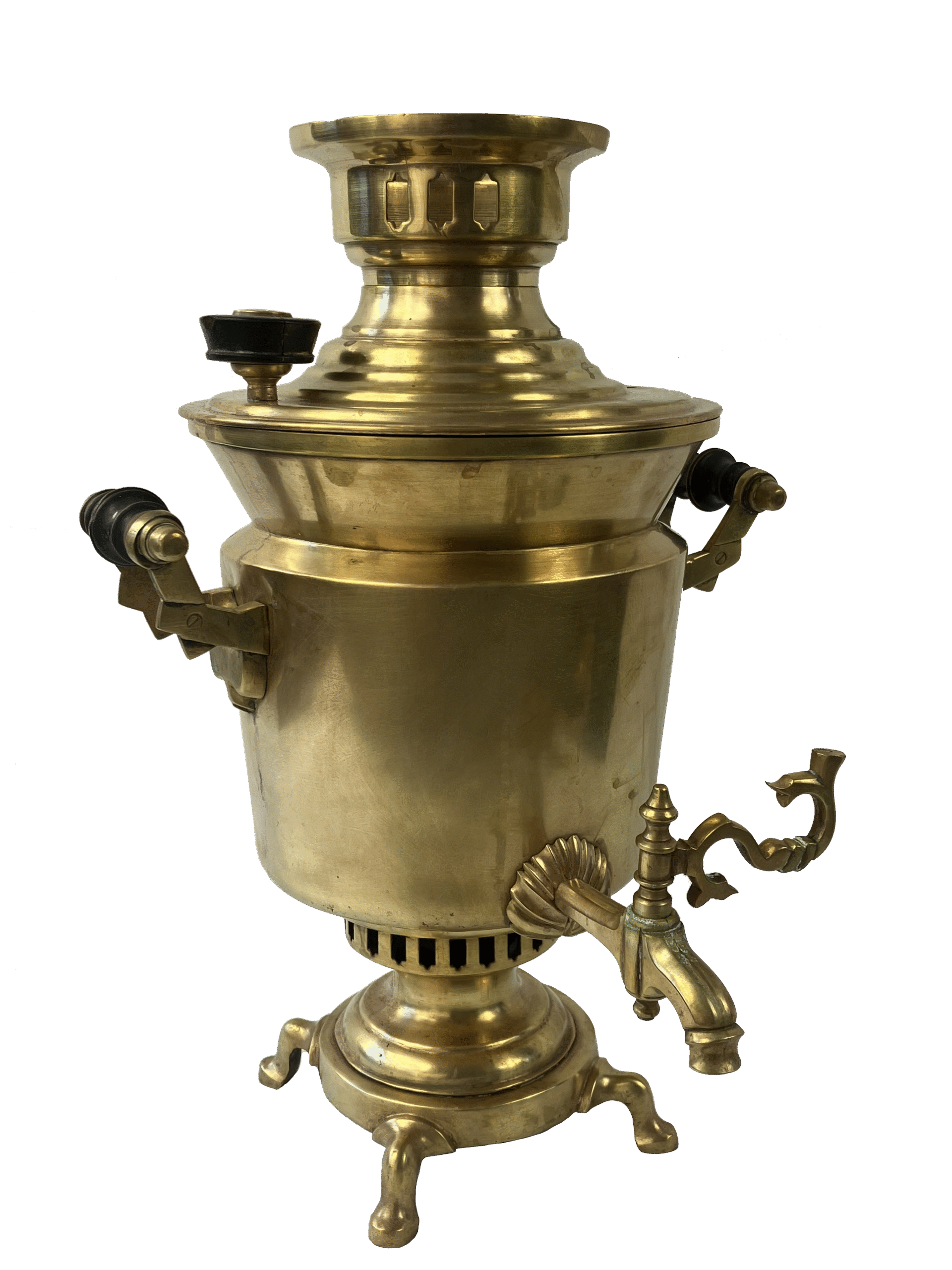
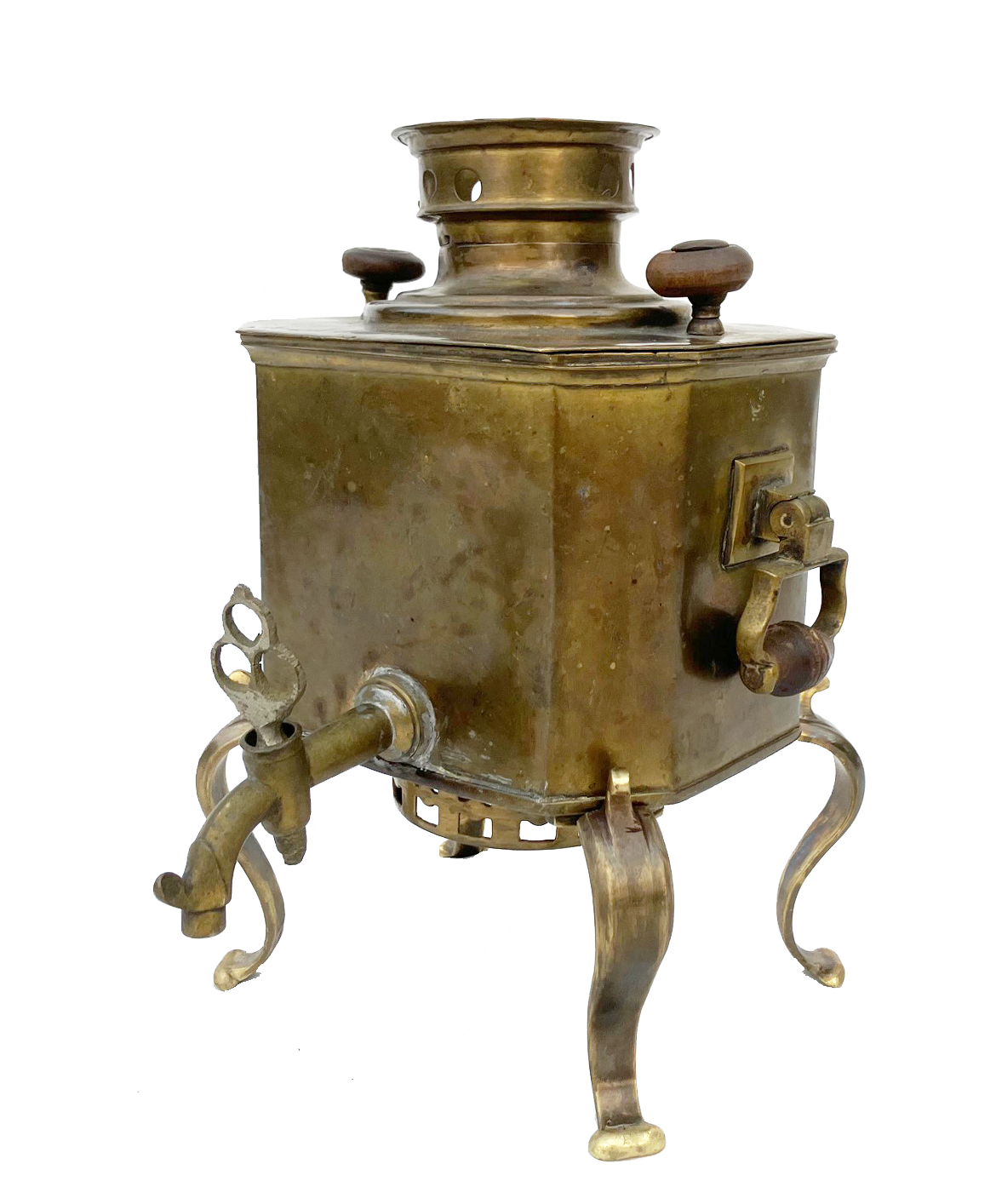
Since then, my collection has grown to include around fifty samovars of various shapes and makers. Beginning with simpler and more affordable examples, I gradually refined the concept of my collection, moving toward more intricate forms and, consequently, more valuable pieces.

The catalog is divided into two main parts. The first section provides brief descriptions of each samovar’s form and configuration, together with a serial number that reflects the chronological order of acquisition. Some entries include short acquisition stories. In the main section, the samovars are grouped by type and classified according to their form, maker’s name, approximate year of production, capacity, dimensions, materials, and manufacturing techniques.

The collection comprises about fifty samovars produced in various provinces of the Russian Empire. They were gathered across the United States, Europe, and several Middle Eastern countries—giving the collection a truly international and unique character.


The Samovar

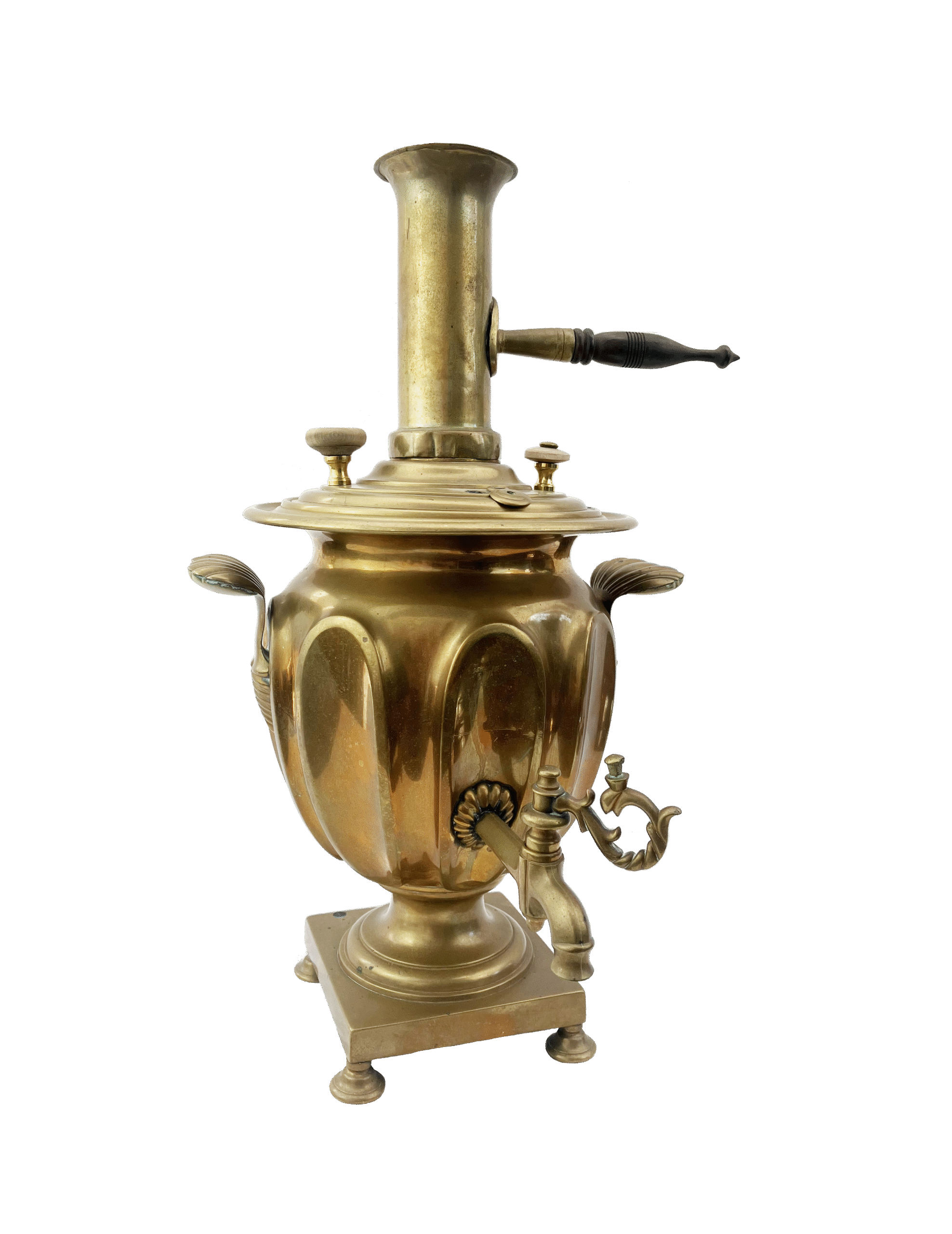
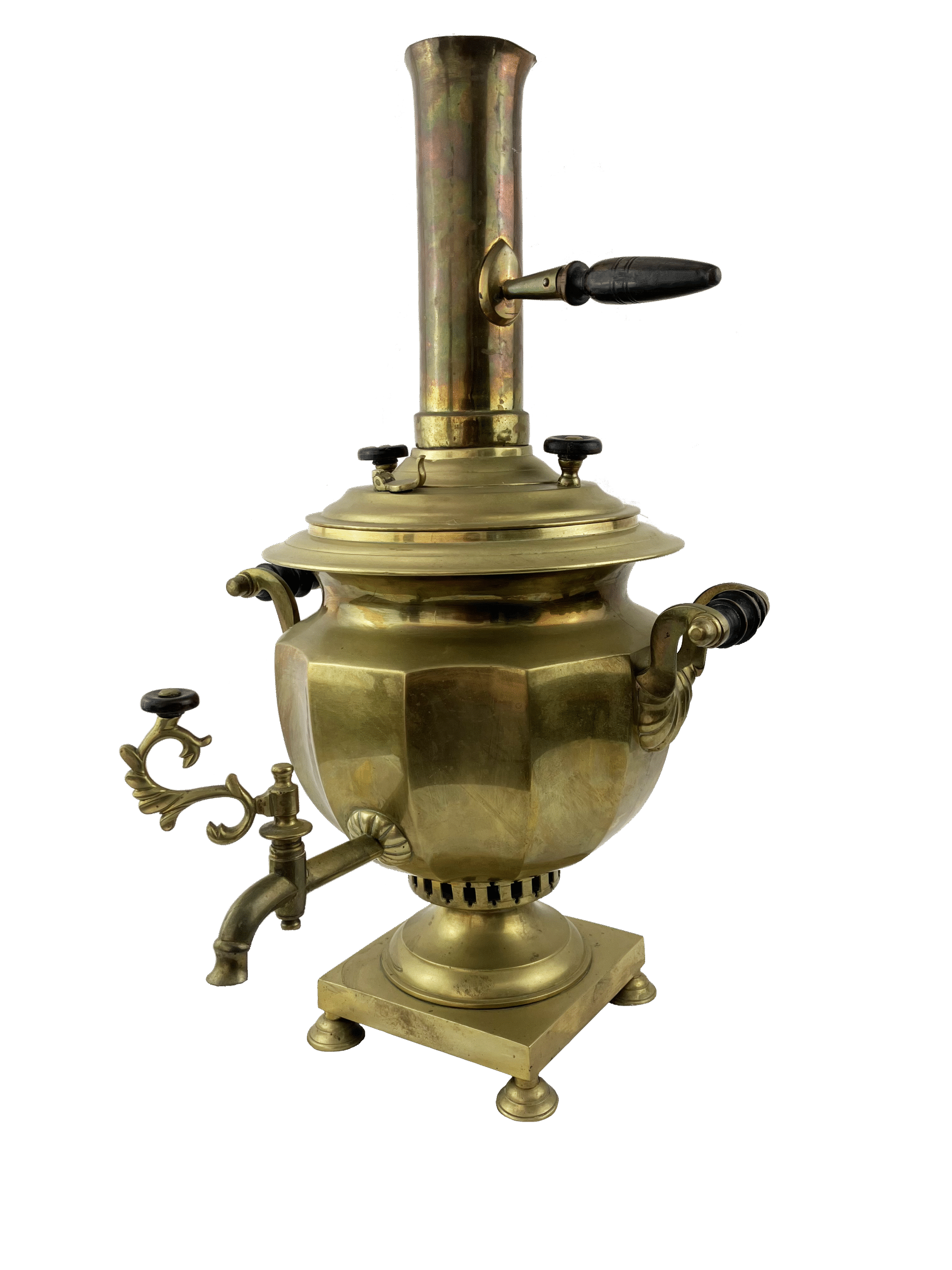
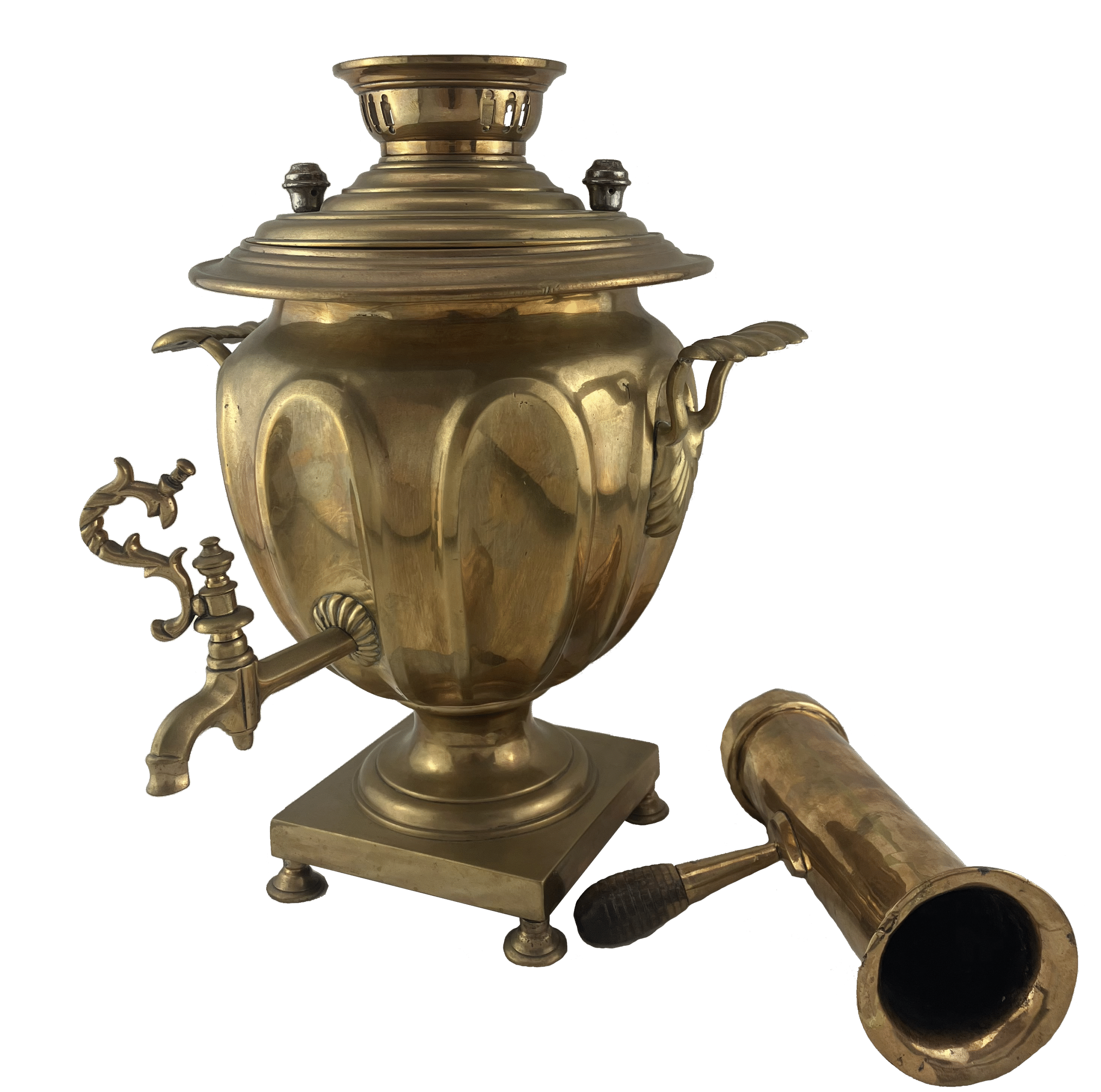
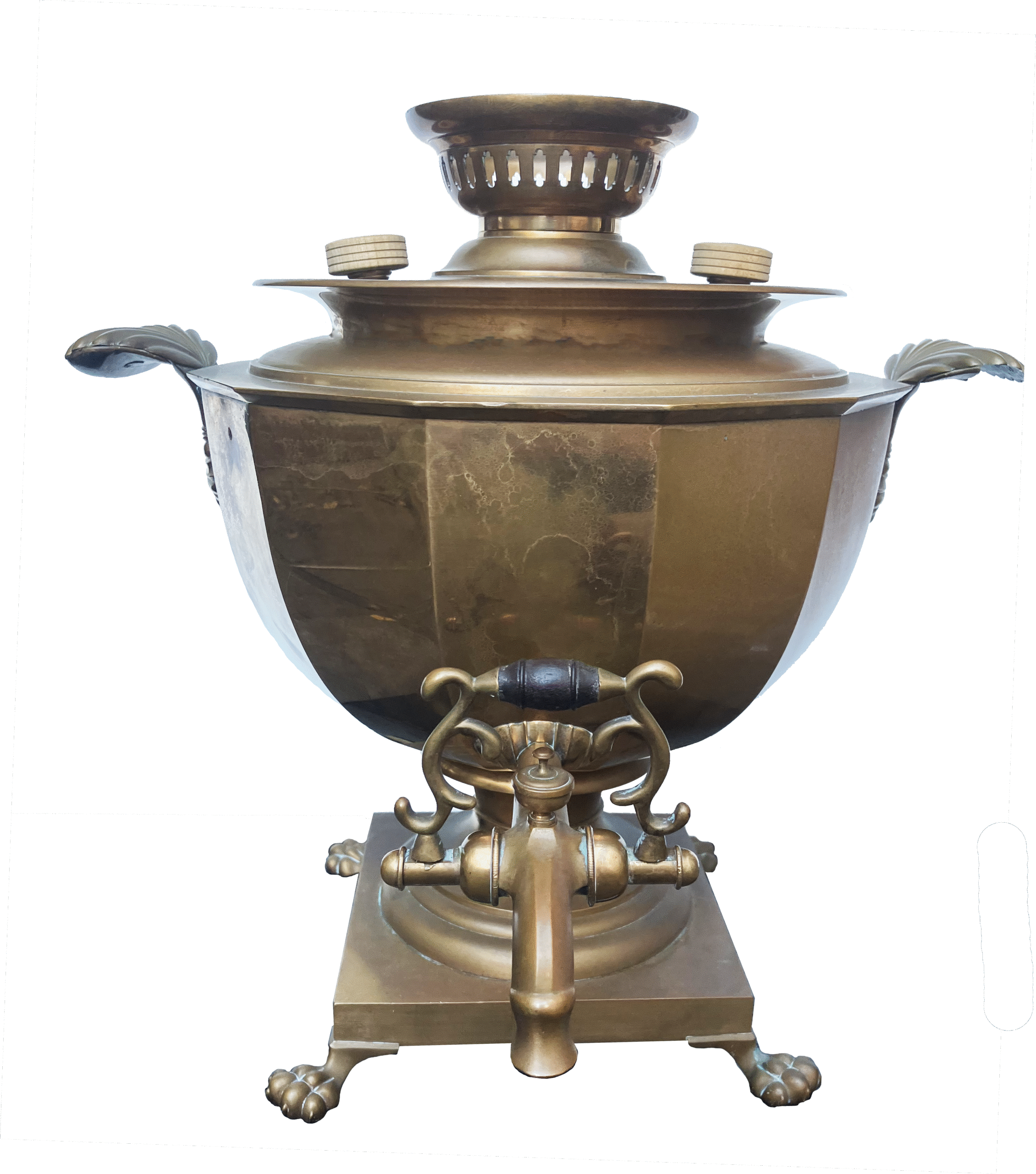
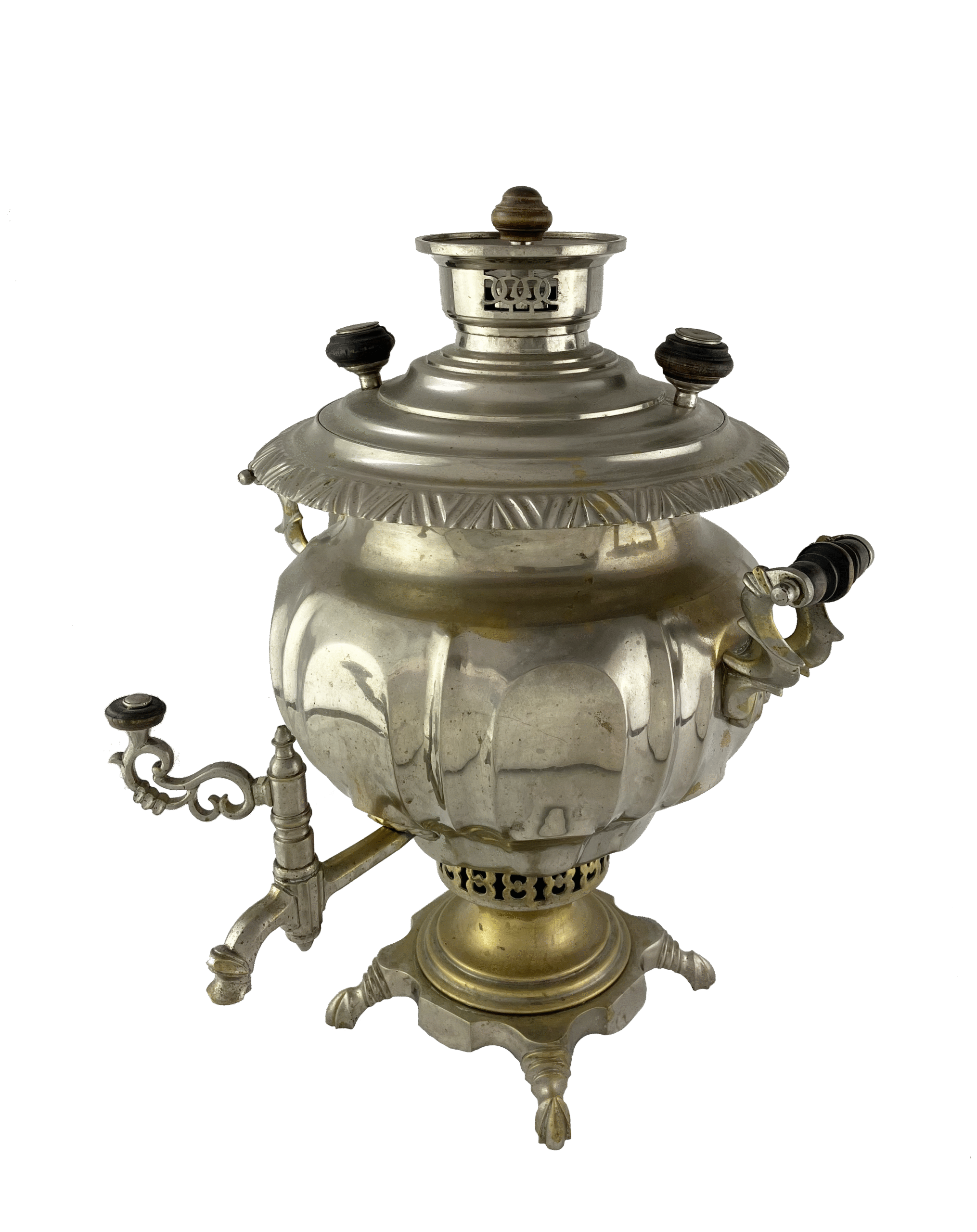
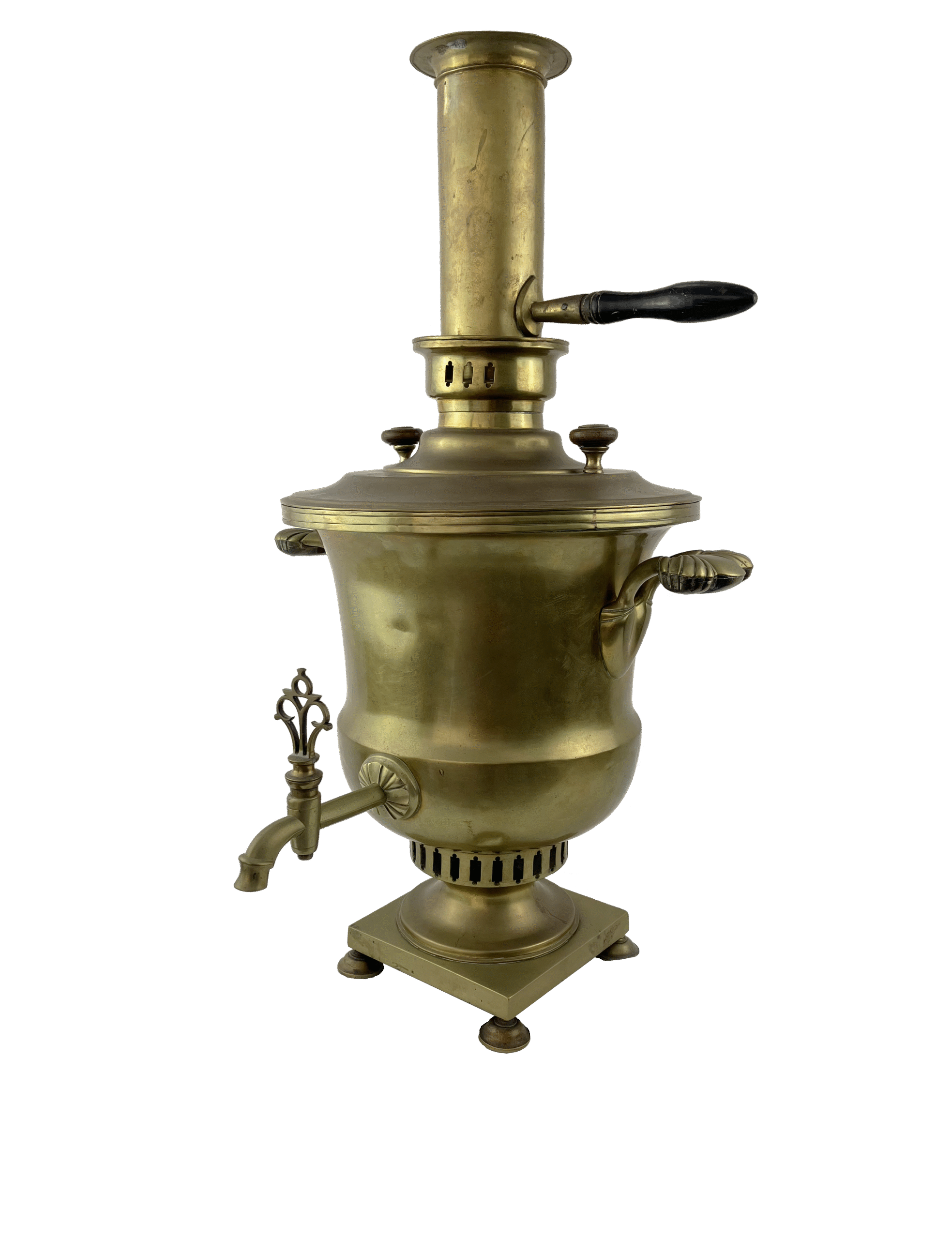
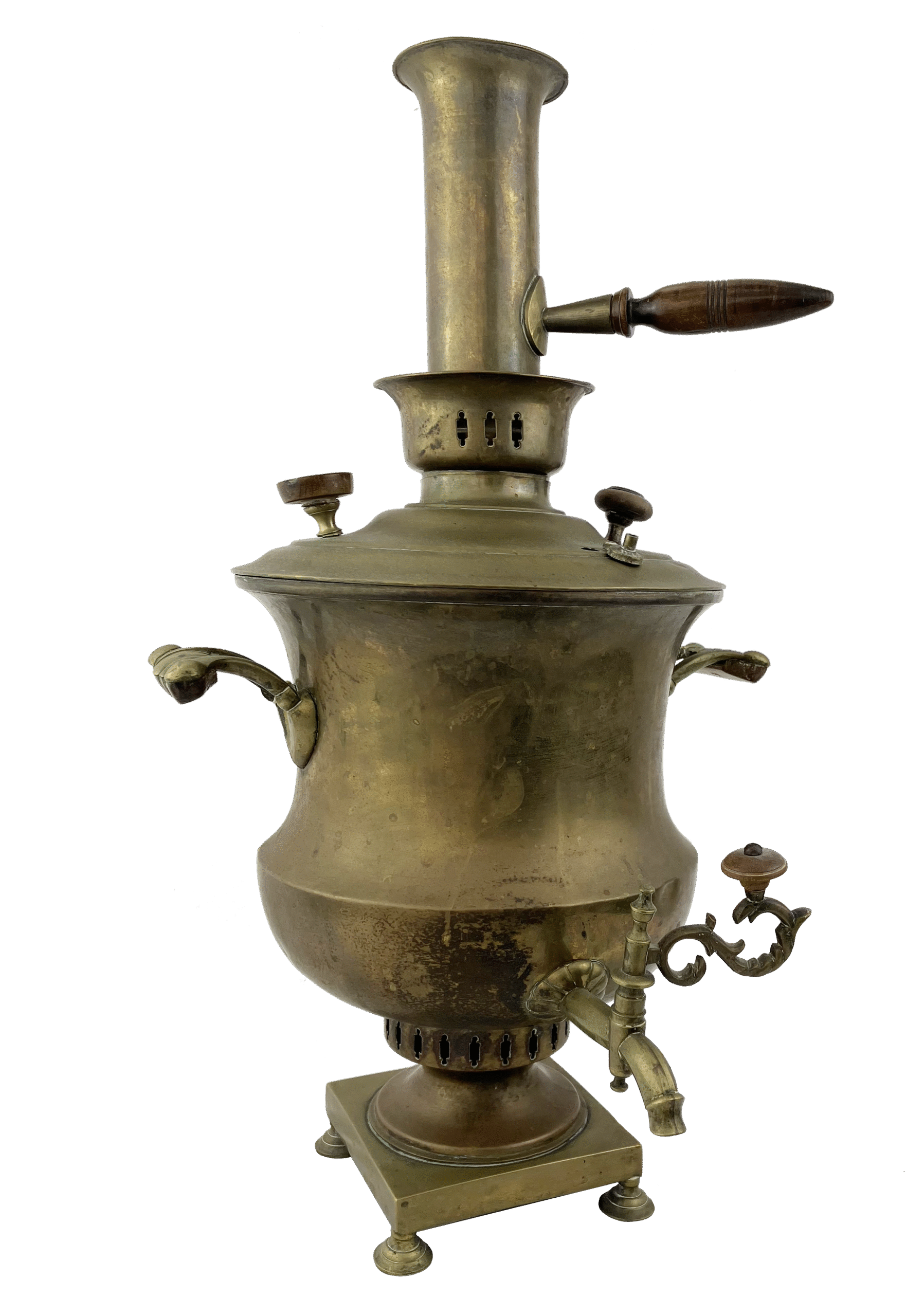
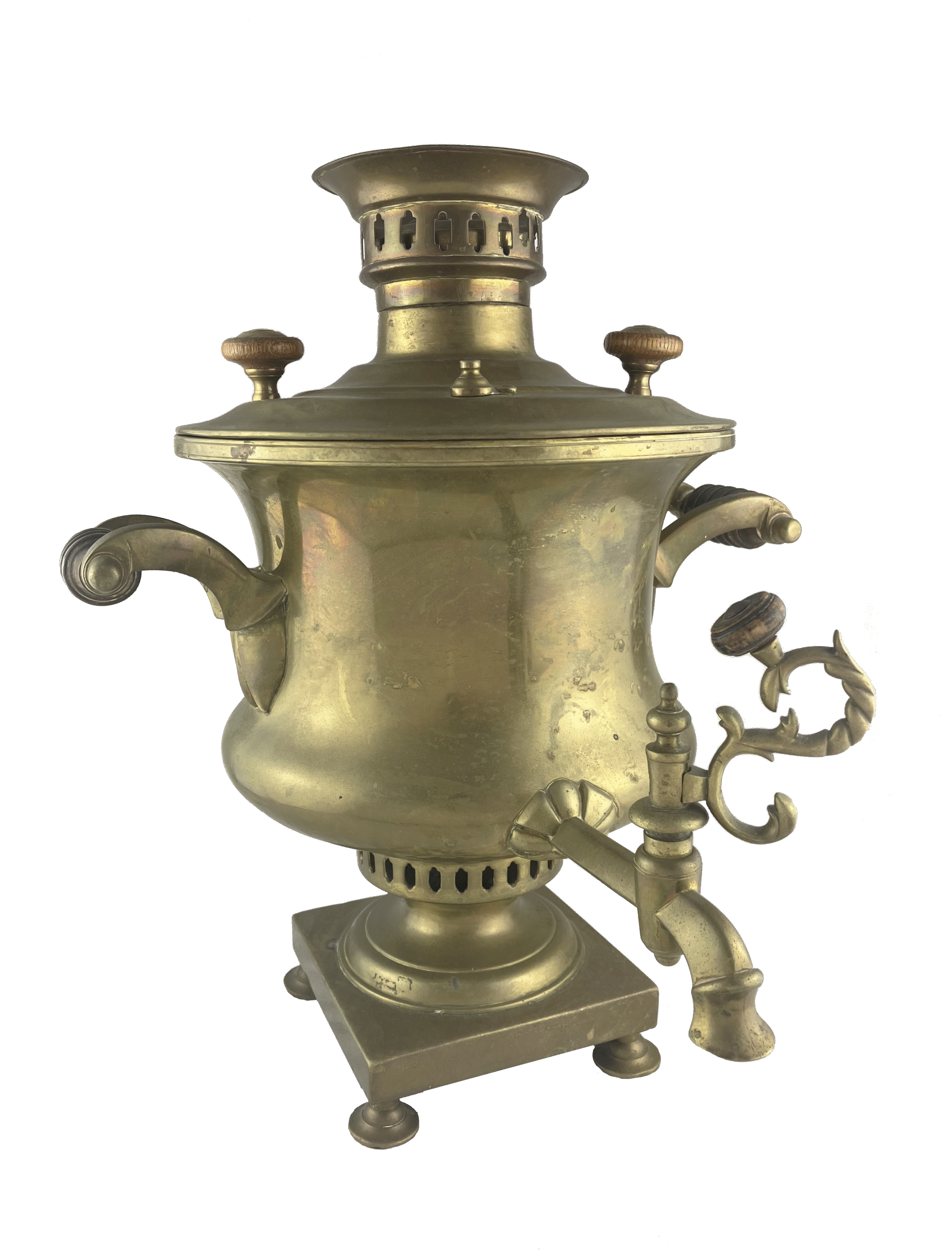
A samovar is typically a brass or copper vessel of various shapes, fitted with an internal chimney and an exterior spout, used for boiling water and preparing tea or coffee. Traditionally, the water is heated by burning charcoal or wood inside the chimney (the fire tube) that runs through the center of the body. This ingenious design remains energy-efficient even today: the heat warms the water from within, rather than wasting energy heating the surrounding air—unlike an open fire.
An old Russian riddle captures it best: “A hole below, a hole above, fire and water in between — what is it?”
Of course — a samovar!

Although the samovar originated in Russia, it became well known far beyond its borders. Through Russian cultural influence, samovars spread throughout Eastern and Southeastern Europe, Iran, Afghanistan, Kashmir, the Middle East, Azerbaijan, and parts of Central Europe. Since the hot water is typically used for making tea, samovars often feature a small ring or platform around the chimney designed to hold a teapot filled with strong tea concentrate.

Samovars were produced in a wide variety of shapes and sizes to meet the needs of all social classes — from peasants to aristocrats. There were toy samovars for children, silver samovars for the nobility, large ones for taverns and tea houses, and small one-liter versions for private conversations. There were even portable samovars made for picnics and travel. Samovar production was capable of satisfying every demand.

From the 18th century onward, the city of Tula became the principal center of samovar manufacturing in Russia. The “Tula samovar” became a hallmark of the city — hence the old saying, “Don’t take your own samovar to Tula.”

By the 19th century, the samovar had become an inseparable part of Russian tea culture. They were produced in large numbers and exported to Central Asia and beyond. Samovar factories participated in regional and international industrial exhibitions, earning awards for excellence, medals, and marks of distinction for their craftsmanship.

The samovar held an important place both in homes and in public tea houses. It was used by people of all social backgrounds. Traditionally, in Russian households, tea from the samovar was poured by the hostess or the eldest daughter. The expression “to sit by the samovar” came to mean an unhurried, heartfelt conversation over tea — a moment of warmth, comfort, and human connection.